

Ross Downing GMC of Gonzales

Blog / Gonzales GMC Service

Blog

All Gonzales GMC Service Gonzales GMC Dealer Ross Downing GMC of Gonzales Service

How Long Can You Drive on a Spare Tire in Louisiana

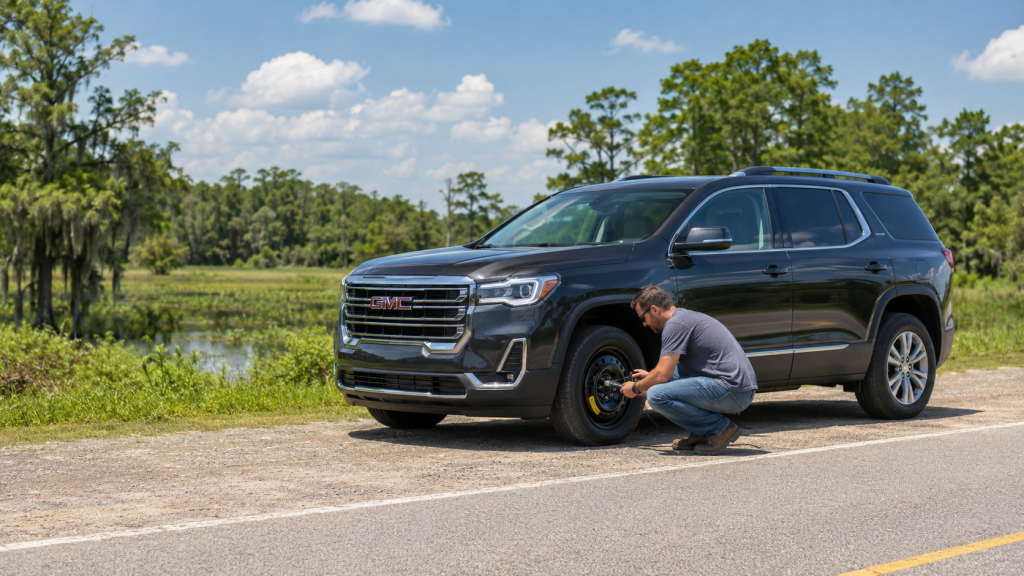
How long can you drive on a spare tire after a flat in Louisiana? The exact limit comes from the spare sidewall and your vehicle owner’s manual. Many compact spares list a speed limit near 50 mph. However, the permitted distance can vary by tire and vehicle. A spare restores short term mobility after tire damage. It does not replace a permanent tire repair. Therefore, travel only far enough to reach a safe inspection location. How Spare Type Changes the Answer Spare tire type controls how the vehicle should be driven after a flat. Compact temporary spares and full size spares serve different roles. A compact spare has a smaller wheel and narrower tread than the normal road tires. It may also carry a much higher inflation requirement. Therefore, its sidewall must receive close review before travel. A full size spare may match the other four tires. However, its age, pressure, tread depth, and load rating still need inspection. A spare stored for years can lose air without visible damage. Check these details before moving: more Read the maximum speed printed on the spare sidewall. Find the spare tire instructions inside the owner’s manual. Measure pressure with a tire gauge before entering traffic. Confirm that the tire has no cracks, bulges, cuts, or exposed material. Check whether cargo or trailer limits apply during spare tire travel. Some vehicles carry a full size wheel with a different tire or tread pattern. Therefore, matching wheel size alone does not prove unrestricted travel. Follow the manual until a tire professional reviews the setup. Why Compact Spares Have Strict Limits Why does a compact spare change how the vehicle moves? Its smaller dimensions alter grip, braking response, and wheel rotation. A narrower tread places less rubber against the road. Therefore, traction may feel different during braking or cornering. Wet pavement can make that difference easier to notice. The spare may also rotate at a different rate than the other tires. That difference can place added strain on driveline parts. For this reason, the manual may limit speed, distance, or axle placement. High speed creates more tire flex and heat. Additionally, hard braking transfers force quickly through the smaller tire. Sharp turns can also place greater load across its narrow contact area. Drive smoothly and leave more stopping room. Avoid sudden steering, rapid acceleration, and rough pavement when possible. Still, do not remain on an unsafe shoulder longer than necessary. A compact spare should support a direct trip to tire service. It should not support errands, commuting, or delayed repair plans. How Louisiana Heat Changes Tire Stress Louisiana summer heat raises pavement and tire temperatures during travel. However, heat does not create one universal distance reduction for every spare. Correct inflation becomes more important during hot travel. An underinflated tire flexes more with each rotation. Consequently, added flex creates internal heat and places more stress on the tire. Check spare pressure before a trip whenever possible. The best reading comes while the tire is cold. That means the vehicle has remained parked for several hours. Do not release air from a warm tire simply because the reading looks high. Heat can raise pressure after driving. Releasing warm air may leave the tire too low after cooling. A compact spare may require far more pressure than the normal road tires. Therefore, never copy the regular tire pressure without checking the spare label. Sunlight and trunk heat can also age stored rubber. Cracks, hard rubber, or sidewall damage require professional review. Visible tread alone does not prove that an old spare remains ready. Highway Travel Loads and Towing Need Extra Care Can you drive on the interstate with a compact spare? The answer rests on the spare speed limit and the safest route to service. Traffic may move faster than the spare permits. Therefore, a nearby surface route may offer a safer path. Choose a route that keeps speed within the printed limit. Heavy cargo adds more weight across the tires. Passengers, tools, luggage, and recreational gear can raise tire strain. Consequently, a loaded GMC truck or SUV may need a different roadside plan. Trailer travel requires even greater caution. A trailer adds tongue weight and changes steering, braking, and stability. The owner’s manual may restrict towing while a temporary spare is installed. Do not assume the restored tire shape means full towing support has returned. Instead, stop in a safe location and review the manual. Roadside assistance may provide the safer route when towing limits remain unclear. Tire pressure monitoring may not read the spare. Therefore, the absence of a warning light does not prove correct pressure. A manual gauge remains necessary. Warning Signs That Mean Stop Driving A spare may develop trouble before reaching its printed distance. Therefore, pay attention to new movement, sound, and steering changes. Stop in a safe location when you notice: Strong vibration through the steering wheel, seat, or floor. Pulling that makes the vehicle difficult to keep straight. Repeated thumping, scraping, rubbing, or flapping sounds. Rapid pressure loss or a tire pressure warning. A visible bulge, crack, cut, or damaged sidewall. Smoke, burning odor, or unusual heat near the wheel. Do not continue solely because the service location is close. A damaged spare can fail without much warning. Therefore, move away from traffic and request roadside help. Also stop when the tire contacts bodywork or brake parts. Incorrect installation or wheel fit can create immediate damage. Loose wheel fasteners can also cause vibration and wheel movement. After installation, recheck that the wheel sits flat against the mounting surface. Follow the tightening steps listed for the vehicle. A service professional should verify the installation soon afterward. When Permanent Tire Service Should Happen Permanent tire service should happen at the nearest reasonable opportunity. A compact spare exists for emergency travel only. A tire professional must inspect the damaged road tire before approving repair. Puncture location, puncture size, internal damage, tread depth, and prior repairs all enter that decision. Sidewall damage usually requires replacement because that area flexes during travel. Driving without enough air can also damage the inside of the tire. Therefore, a small visible puncture may hide larger internal harm. Bring these details to the service visit: Where the pressure loss first appeared. How far the vehicle traveled after the warning. Whether the tire became fully flat. Whether sealant entered the damaged tire. Whether the spare produced noise, vibration, or steering changes. Ross Downing GMC Gonzales can inspect the damaged tire, check the spare, and review replacement options. The service team can also confirm inflation requirements for the exact GMC. A spare tire should shorten the roadside emergency, not extend it. Follow the printed limits, reduce speed, and avoid added load. Then arrange permanent tire service before normal travel resumes.

Vehicle Inspection Report Dealership Guide in Gonzales

A vehicle inspection report dealership guide should explain what was checked, measured, found, and recommended before purchase. A useful report records present wear, visible defects, diagnostic findings, and repair needs. It should also identify the exact vehicle through its identification number. No inspection can promise a repair free future. However, a detailed report gives Gonzales shoppers stronger information before signing. It also creates a written record for pricing, service, and warranty discussions. What a Vehicle Inspection Report Should Explain What should a vehicle inspection report show before you purchase a used vehicle? A useful report records measured wear, visible defects, diagnostic findings, and recommended repairs. The report should name the technician or shop that completed the work. It should also show the inspection date and current mileage. In addition, the vehicle identification number should match the unit under review. A useful report should include: more Tire tread depth and tire age should appear for all four positions. Brake pad measurements and rotor findings should appear in writing. Fluid levels, leaks, battery test results, and warning lights should be recorded. Diagnostic codes and road test findings should include clear notes. Repair needs should be grouped by urgency and estimated timing. A simple checkmark gives little context. By contrast, measurements show how much material remains and which items may need service soon. Why History Records Do Not Replace Inspection A vehicle history report reviews recorded events from the past. It may show title records, reported collisions, mileage entries, prior owners, and some service work. However, not every repair enters a reporting database. Private work, small body repairs, and unreported damage may never appear. Therefore, a clean history report cannot prove clean current condition. A physical inspection answers a different question. It reviews what the vehicle shows today. Paint differences, panel gaps, leaks, tire wear, and warning codes can reveal concerns outside the history file. Service records add another layer. They may confirm oil changes, brake work, fluid service, or major repairs. Still, missing records do not prove that care never occurred. For this reason, shoppers should review the history file, service records, and physical report together. Each source fills a different information gap. What Tires Brakes and Suspension Can Reveal Tires can reveal more than remaining tread. The report should record tread depth, tire age, sidewall damage, matching type, and wear shape. Uneven wear can point toward low pressure, missed rotations, worn steering parts, suspension wear, or wheel geometry concerns. Therefore, the report should explain the pattern and any next step. Brake review should include pad thickness, rotor surface, brake fluid, pedal feel, and warning lights. A vehicle may stop normally while still nearing brake service. Steering and suspension parts also deserve close review. Worn joints, bushings, shocks, or struts can create noise, looseness, or poor tire wear. During the road test, the vehicle should track straight and brake smoothly. Vibration, pulling, clunks, or repeated noise should appear in the written findings. These measurements create a clearer repair picture. They also make price discussions more specific. What Fluids and Underhood Checks Should Cover Fluid review should include levels, visible condition, odor, and leak location. Engine oil, coolant, brake fluid, and accessible driveline fluids deserve attention. Dark fluid alone does not prove internal damage. Therefore, the technician should compare visual findings with service records, mileage, and manufacturer intervals. Leaks need clear notes. The report should identify the fluid type, source area, severity, and need for further testing. A damp area and an active drip require different responses. Battery testing should include measured condition and starting strength. Belts, hoses, filters, terminals, and cooling parts should also receive review. The underbody can reveal fluid loss, impact damage, corrosion, or loose shields. In addition, the exhaust should receive a visual check for damage or leaks. A written report should separate maintenance needs from diagnostic concerns. That distinction keeps routine service from sounding like confirmed mechanical failure. Why the Scan and Road Test Both Matter A diagnostic scan reads active, pending, and stored fault codes. It can add useful electronic information even when no warning light appears. Still, a scan cannot measure tire age, brake thickness, fluid leaks, or body repairs. It also cannot confirm how the vehicle feels while moving. The road test should include changing speeds, turns, bumps, and controlled braking. Those inputs test steering, shifting, braking, suspension movement, and noise. The driver should note delayed shifts, vibration, pulling, steering play, brake pulsation, or unusual sounds. Climate controls, cameras, windows, locks, and interior electronics should also receive testing. One short loop on a smooth road may miss concerns. Therefore, the route should include several surfaces and speeds when safe. Electronic data and road feedback should support each other. When either source raises concern, further diagnosis may be needed before purchase. Which Documents Should Be Reviewed Before Signing The inspection report is one part of the final review. Gonzales shoppers should also read the history file and federal window notice. Service records, recall information, and warranty terms deserve review too. Before signing, confirm these items: The federal window notice should state whether warranty coverage applies or the vehicle is sold as is. Written warranty terms should identify covered parts, limits, dates, and required steps. Any promised repair should appear in the purchase paperwork. Open recall information should match the exact vehicle identification number. The inspection report should list findings, measurements, and repair priorities. An inspection does not create warranty coverage. A warranty defines which repairs may receive coverage under its written terms. Spoken repair promises can become difficult to prove later. Therefore, every promised repair should appear in writing before delivery. Ross Downing GMC Gonzales can review inspection records, warranty details, and service history for available used vehicles. Shoppers should ask questions before signing and keep copies of every document. A thorough review cannot predict every future repair. However, it can show current wear, known concerns, and near term service needs. That information supports a more informed used vehicle decision.

GMC Service Appointment in Gonzales: What to Expect

A GMC service appointment in Gonzales follows a defined sequence from the moment you arrive at Ross Downing GMC to the moment you drive away. Most friction shoppers associate with dealership service comes from not knowing what happens at each step. Understanding the process puts you in a better position to ask the right questions, authorize the right work, and leave with a complete picture of your vehicle's condition. Scheduling and What to Have Ready The service process begins before you arrive. Having three pieces of information ready shortens check-in time considerably. Your current mileage, a clear description of any concern, and your drop-off or wait preference are the core inputs the service team needs to prepare your visit. Concern description matters more than most owners realize. A vague note such as "makes a noise" gives the technician a wide diagnostic field. A specific description such as "intermittent clicking from the front left wheel at low speed over rough pavement" narrows the starting point. That specificity reduces diagnostic time and improves the accuracy of the repair order from the first line. more Scheduling in advance increases the likelihood that a loaner vehicle or shuttle is available. Loaner availability is not guaranteed on a walk-in basis. Requesting a loaner at scheduling gives the service team lead time to confirm and arrange the vehicle before your appointment date. A standard oil change with no additional concerns typically runs under an hour. A loaner is not necessary for that visit. For visits involving diagnosis, recall repairs, or multiple services, confirming loaner availability at the time of booking removes a logistical gap on the day of your appointment. Check-In and the Repair Order The service advisor is your primary contact for the entire visit. They translate your concern into a documented work order, confirm the requested services, and communicate any findings to you before work begins. At check-in, the advisor records your mileage, confirms your vehicle identification number, and documents your concern on the repair order. The repair order is the legal record that governs every action the technician takes on your vehicle. For warranty work, the repair order must contain three elements before anyone submits a claim: the customer complaint, the technician's identified cause, and the correction performed. Reviewing your concern description on the repair order before you leave the service desk confirms the documentation is accurate from the start. The advisor also reviews your vehicle's service history at check-in. That review surfaces open recalls, upcoming factory-scheduled maintenance intervals, and any concerns from prior visits that the team did not previously address. If an open recall applies to your vehicle, the advisor confirms whether parts are available and whether the repair fits within the current visit or requires a separate appointment. The Multi-Point Vehicle Inspection Every GMC Certified Service visit at Ross Downing GMC includes a Multi-Point Vehicle Inspection. A factory-trained technician evaluates tires, brakes, fluid levels, battery condition, wiper blades, belts, filters, lighting, and suspension components across multiple checkpoints. The technician records results on a color-coded form using three indicators. Green means the component is in good condition and needs no action. Yellow means the component functions but shows wear that warrants attention soon. Red means the component needs attention now. That three-tier structure gives you a ranked view of your vehicle's condition across every category the technician evaluates. The inspection report does not authorize any work. Every yellow and red item requires your explicit approval before the technician proceeds. The advisor contacts you, presents each finding with a cost estimate, and waits for your individual decision on each item. Nothing moves forward without that conversation. Using Yellow Findings as a Planning Tool Green items confirm those components are in acceptable condition at the time of inspection. Red items require a decision during the current visit or a documented plan for immediate follow-up. Yellow items carry the most strategic value for proactive owners. They identify components approaching a service interval before the component reaches a failure point. A yellow brake finding today gives you time to budget for pad replacement before the next visit. Reviewing the yellow section at each visit builds a forward-looking service schedule and reduces surprise costs over the life of the vehicle. Oil Change and Certified Service Standards An oil change at Ross Downing GMC is not a standalone drain-and-fill. The technician completes the Multi-Point Inspection alongside it at no additional charge. That makes the oil change the most common entry point into the full Certified Service visit. The technician confirms the correct oil specification for your specific engine before the service begins. GMC vehicles require ACDelco dexos-approved oil. The technician matches the viscosity grade to the engine's factory specification, not a generic category. For most current GMC trucks and SUVs, that means a full synthetic formulation. After the drain and refill, the technician resets the oil life monitor to reflect the new service interval. The repair order documents the oil type, quantity, and mileage. That record matters if an engine concern arises later and someone reviews the service history. Generic quick-lube shops match oil to a general grade category rather than the engine-specific dexos approval standard. For a GMC engine under warranty or extended warranty coverage, non-approved oil can complicate a claim if an engine concern traces back to lubrication. The technician replaces the filter at every oil change. If the inspection identifies an air filter, cabin filter, or fluid due for replacement, the advisor presents each item as a separate recommended service. Each one requires your individual approval before the technician performs any additional work. Approval, Timeline, and Pickup Once the inspection is complete and the advisor communicates the findings, they provide a completion estimate based on the approved work. A standard oil change and inspection without additional repairs runs under one hour for most appointments. Additional approved repairs extend that timeline. The advisor confirms a revised estimate before any additional work begins. At pickup, the advisor walks through the completed repair order with you. The document lists every service the technician performed, the oil specification used, mileage at service, any warranty claim numbers, and each inspection finding with its color designation. Reviewing the repair order before you leave closes the visit correctly. The repair order is also a permanent service record that carries value beyond the current visit. A complete and documented service history supports warranty claims, supports CPO eligibility if you sell the vehicle through a GMC dealer, and gives any future buyer a transparent view of how the vehicle was maintained.

How Transparent Service Updates Improve Your Experience

Dealership service communication shapes how customers understand repair timelines, estimate approvals, technician findings, and vehicle status throughout the repair process. Many service frustrations begin when drivers only see the final invoice instead of the workflow happening behind the scenes. At Ross Downing GMC Gonzales, the repair process involves multiple stages that connect technicians, diagnostic equipment, parts departments, and service advisors together. Understanding how those stages work gives GMC owners clearer expectations when repairs, inspections, or maintenance visits move beyond a simple oil change. What Happens After Vehicle Check In? Once a GMC vehicle enters the service lane, the process immediately moves into documentation and inspection. The advisor records customer concerns, verifies symptoms, checks mileage, reviews warranty information, and attaches technician notes before the vehicle enters the shop queue. This step matters because vague descriptions can slow diagnosis later. A statement like “the truck feels strange” creates far less direction than identifying vibration speed ranges, warning messages, startup timing, or braking symptoms. After check in, the technician begins an inspection sequence tied to the original concern. A Sierra with trailer brake warnings may require electrical testing, connector inspections, battery voltage evaluation, and scan tool diagnostics before any repair recommendation appears. A Yukon arriving with suspension concerns may move through ride height measurements, compressor evaluation, road testing, and suspension module scans. Most dealership workflows include: more • Multi point inspections that document tire wear, brake condition, fluid levels, and visible wear items • Diagnostic scans that pull stored fault codes from onboard control modules • Technician notes that identify confirmed failures or additional testing requirements This inspection stage creates the foundation for estimate accuracy. Without a complete evaluation, advisors risk quoting repairs before technicians confirm the actual source of the issue. How Diagnostic Testing Builds a Repair Estimate Many customers see an estimate as a simple parts and labor sheet. Inside the dealership, the estimate begins with technician diagnosis. Diagnostic work identifies the source of a concern before replacement recommendations move forward. Modern GMC vehicles contain dozens of modules monitoring powertrain operation, steering, braking, suspension calibration, emissions output, driver assistance hardware, and infotainment operation. A warning light does not automatically identify a failed component. Technicians use factory scan tools, live data readings, pressure tests, voltage testing, software diagnostics, and physical inspections to isolate faults. A GMC Acadia with intermittent overheating could involve: • Cooling fan operation • Thermostat function • Water pump circulation • Air pockets inside the cooling system • Sensor communication issues • Radiator flow restrictions Each inspection stage narrows the possible causes before repair authorization occurs. That process explains why some estimates change after diagnostics begin. The original symptom may lead technicians toward additional findings that were not visible during initial check in. Repair estimates also include labor calculations tied to factory repair procedures. Some repairs involve simple component replacement. Others require calibration procedures, programming sequences, road testing, or disassembly that adds labor hours. Driver assistance features in newer GMC models create additional calibration requirements after repairs involving cameras, steering components, suspension work, or collision related repairs. Why Repair Timelines Sometimes Change One of the largest frustrations during vehicle service involves changing completion estimates. Customers may hear one timeline during check in and another after diagnosis. In many situations, the timeline changes because the diagnostic process uncovered additional repair requirements or because parts sourcing changed after inspection. A repair can move through several stages before completion: Initial symptom verification Diagnostic inspection Estimate creation Customer authorization Parts acquisition Repair installation Calibration or programming Final quality inspection Vehicle delivery preparation Any interruption inside those stages can extend completion timing. Parts availability creates one of the largest variables. Some components remain stocked locally while others ship from regional distribution centers or national warehouses. Newer technology features inside GMC trucks and SUVs may involve electronic modules, camera assemblies, air suspension hardware, or specialty sensors that are not stocked in every market. Heavy repair volume also impacts workflow timing. Diagnostic technicians may already be assigned complex drivability concerns, transmission inspections, electrical repairs, or diesel truck evaluations when additional vehicles arrive. Repair queues shift throughout the day as emergency repairs, tow ins, warranty approvals, and technician availability change. Communication matters most during these moments because silence creates uncertainty. Clear updates explaining diagnostic progress, parts shipping status, or repair sequencing reduce confusion surrounding delays. How Service Communication Flows During Repairs The advisor acts as the bridge between the customer and the technician. Technicians spend much of the day inside repair bays performing inspections and repairs, while advisors manage scheduling, estimate approvals, repair updates, warranty communication, and delivery coordination. Strong dealership service communication involves timing as much as information. Customers want updates when major repair stages change, not only when the vehicle is finished. A meaningful update may include completed diagnostics, parts ordering status, additional findings, revised completion timing, or technician recommendations. Digital communication tools now allow dealerships to send: • Text updates for estimate approvals • Video inspections showing repair findings • Status notifications during repair progression • Links for service authorization These tools create clearer visibility into repairs that customers cannot physically observe inside the shop. A brake inspection video showing rotor scoring or fluid leakage communicates repair urgency far more clearly than a vague phone description. Communication quality also shapes trust during larger repairs. Transmission work, diesel diagnostics, electrical repairs, and suspension failures may require extended inspection periods before technicians finalize repair direction. Regular updates reassure customers that the vehicle is still progressing through active diagnostic stages. What Customers Should Evaluate During Service Visits Repair communication is not only about friendliness. It also reflects workflow organization, technical clarity, and operational transparency. Customers evaluating a dealership service department should pay attention to how clearly information is explained throughout the visit. Strong communication usually includes: • Clear explanations of diagnostic charges before repairs begin • Realistic timeline discussions instead of rushed promises • Approval requests before additional repairs are performed • Documentation showing technician findings and recommendations • Follow up communication when timelines shift Drivers should also evaluate whether explanations make sense technically. A strong advisor can explain why a repair is needed, what failed, how the technician confirmed the issue, and whether additional inspections may become necessary. At Ross Downing GMC Gonzales Service Center, service communication plays a major role in reducing uncertainty during maintenance and repair visits. Whether the vehicle requires diagnostics, factory scheduled maintenance, electrical testing, or complex truck repairs, transparency throughout the process creates clearer expectations and a smoother ownership relationship.

What Gonzales Drivers Should Know About GMC Engine Recalls And Warranty Coverage In 2026

GMC trucks are built to deliver strength, durability, and long term confidence, but even well engineered systems can require attention when issues are identified at a broader level. For many drivers in Gonzales, hearing about an engine recall or questioning warranty coverage creates uncertainty about what it means for their vehicle and what happens next. These concerns are not just about the engine itself. They are about understanding how manufacturers identify issues, how service is handled, and who is responsible for the repair. When recall and warranty processes are clearly understood, ownership becomes more predictable and far less stressful. How GMC Engine Recalls Are Identified And What They Mean Many drivers ask what a GMC engine recall actually is and whether it means something is wrong with their specific vehicle. A recall is a manufacturer issued action that addresses a defect related to safety or performance that has been identified across a group of vehicles. In a GMC Sierra, this process begins when data from vehicles in use reveals a pattern that indicates a potential issue. Engineers analyze this information to determine whether the concern is related to a component, system design, or manufacturing process. Once a recall is issued, it applies to vehicles that share the same condition. more Recalls are based on identified defects, not routine wear The issue must meet specific safety or performance criteria Not every vehicle experiences the issue, but all affected vehicles are included This distinction matters because a recall does not mean a vehicle is failing. It means the manufacturer is addressing a known condition before it becomes a larger problem. How Warranty Coverage Applies To Engine Issues Drivers often want to know whether engine repairs are covered under GMC warranty and how that differs from a recall. Warranty coverage applies to defects in materials or workmanship within a defined time and mileage period. In a GMC Sierra engine system, warranty coverage is evaluated based on how the issue occurred. If a component fails due to a defect, the repair is typically covered. If the issue is related to wear, maintenance, or external factors, it may not be included. The key difference between recall and warranty lies in responsibility. Recalls are fully covered regardless of vehicle age or mileage Warranty coverage is limited by time and mileage terms Both apply to defects, but under different conditions Understanding this difference helps clarify whether a repair will be covered and why. What Happens During A GMC Recall Service Visit A common concern is what actually happens during a recall repair and how the process works. A recall service visit follows a structured approach designed to confirm the condition and apply the correct solution. At a GMC dealership, technicians begin by verifying that the vehicle is included in the recall. This ensures the correct procedure is followed. Next, the affected system is inspected to confirm the presence of the condition. Depending on the recall, this may involve updating software, replacing a component, or addressing a specific part of the engine system. Verification confirms the vehicle is part of the recall Inspection ensures the correct condition is identified Repair or update resolves the issue based on manufacturer guidance This process is designed to be precise, ensuring the issue is addressed correctly rather than broadly assumed. When Engine Repair Or Replacement Is Required Drivers often ask whether an engine will be replaced under a recall or warranty and what determines that outcome. Engine repair or replacement depends on the severity and location of the issue within the system. In a GMC Sierra, if a defect affects a specific component, the repair may involve replacing only that part. If the issue impacts the engine more broadly or cannot be isolated to a single component, replacement may be required. Component level issues are typically repaired rather than replaced System wide defects may lead to engine replacement Decisions are based on diagnostic findings and manufacturer guidelines This approach ensures that the solution matches the scope of the issue rather than applying unnecessary repairs. How To Navigate Recalls And Warranty With Confidence For many drivers, the challenge is not just understanding recalls and warranty coverage but knowing how to respond when a situation arises. The key is to approach these processes with clarity rather than uncertainty. Drivers can begin by checking whether their vehicle is affected by a recall using official manufacturer resources. If a recall is present, scheduling service ensures the issue is addressed promptly. Understanding warranty coverage allows drivers to anticipate what is included and what falls outside of that protection. Check recall status using manufacturer or dealership tools Schedule service promptly if a recall is identified Review warranty terms to understand coverage boundaries For GMC owners in Gonzales, this approach turns what can feel like a complex situation into a clear and manageable process. When the system is understood, decisions become easier and confidence in ownership remains intact.

When To Replace Your Cabin And Engine Air Filters - What Louisiana Truck Owners Should Watch For

Every GMC truck is built to handle changing conditions with strength and precision. From daily commutes through Gonzales to long drives across Louisiana highways, each system is designed to respond to its environment. Air filters are part of that system, working quietly in the background to protect performance and maintain comfort. Many drivers only think about air filters when they are mentioned during service, yet their role is constant. Understanding how these filters function and when they actually need attention helps bring clarity to maintenance decisions and prevents unnecessary service. How Engine And Cabin Air Filters Work In GMC Trucks Drivers often ask how often they should replace an engine air filter, but that question begins with understanding what the filter does. An engine air filter is designed to prevent dust, debris, and contaminants from entering the engine while allowing clean air to flow through the intake system. In a vehicle like the GMC Sierra, the engine depends on a precise balance of air and fuel to operate efficiently. The air filter ensures that the air entering the combustion process is clean, which supports consistent performance and protects internal components. The cabin air filter serves a different purpose. In a GMC Yukon, the cabin air filter cleans the air that enters the interior through the ventilation system. It removes particles such as dust, pollen, and pollutants before they reach the cabin. more The engine air filter protects combustion efficiency and internal engine components The cabin air filter supports interior air quality and HVAC system performance Both filters rely on unrestricted airflow to function correctly These systems work continuously, meaning their condition directly affects how the vehicle performs and how it feels inside. What Happens When Air Filters Become Restricted Or Dirty Many drivers wonder what actually happens if an air filter is not replaced. As filters collect debris over time, airflow becomes restricted. This restriction changes how the system operates. In the GMC Sierra engine system, reduced airflow limits the amount of oxygen available for combustion. This can lead to reduced efficiency and less responsive acceleration because the engine cannot maintain its ideal air to fuel balance. In the GMC Yukon cabin system, a restricted filter affects how air moves through the ventilation system. This can reduce airflow from vents and impact how effectively the system controls temperature and air quality. Restricted engine airflow can affect combustion efficiency and responsiveness Reduced cabin airflow can impact comfort and air circulation Increased strain on systems can lead to additional wear over time These changes often happen gradually, which is why they are not always immediately noticeable. How Driving Conditions In Louisiana Affect Filter Lifespan Drivers frequently ask how often air filters should be replaced, but the answer depends heavily on where and how the vehicle is driven. In Louisiana, environmental conditions can influence how quickly filters become restricted. Dust, humidity, and airborne particles all contribute to filter buildup. In areas around Gonzales, driving on rural roads, construction zones, or during seasonal changes can increase the amount of debris entering both engine and cabin systems. Humidity also plays a role by causing particles to adhere more easily to filter surfaces, accelerating restriction. Dust and road debris increase filter load over time Humidity can accelerate buildup on filter surfaces Frequent short trips can prevent systems from clearing accumulated particles This means replacement timing is not fixed. It is shaped by real driving conditions rather than a single mileage number. How To Tell When Replacement Is Actually Needed A common concern is whether a filter truly needs to be replaced or if it is being recommended too early. Recognizing the signs of restriction provides clarity. In the GMC Sierra, a dirty engine air filter may lead to reduced responsiveness or a feeling that the engine is working harder than usual. These changes are often subtle but noticeable over time. In the GMC Yukon, a cabin air filter that needs replacement may result in reduced airflow from vents or changes in how the interior air feels. Reduced airflow from vents can indicate cabin filter restriction Decreased responsiveness can suggest limited engine airflow Visible debris on inspection confirms buildup Inspection provides the most reliable answer. Instead of relying only on mileage, evaluating the condition of the filter ensures replacement happens when it is actually needed. How To Follow A Maintenance Rhythm Without Over Servicing Many drivers want to avoid unnecessary service while still maintaining their vehicle properly. The key is to approach air filter replacement as part of a broader maintenance rhythm rather than a fixed schedule. For GMC truck owners, this means combining periodic inspection with an understanding of driving conditions. Filters should be checked regularly and replaced when restriction begins to affect system performance. Align inspections with routine service visits Adjust expectations based on driving environment Focus on condition rather than strict mileage intervals This approach allows maintenance to remain practical and responsive rather than reactive or excessive. For drivers in Louisiana, where conditions can vary, this balance ensures that air filters continue to support performance and comfort without creating unnecessary service decisions.

Check out How Service Team at Ross Downing GMC of Gonzales Keeps Your Truck Road-Ready

How the Service Team at Ross Downing GMC of Gonzales Keeps Your Truck Road-Ready

Your GMC truck is tough and built to last a lifetime, but it requires regular service and maintenance to keep it working at its best. As your GMC dealership, we want to tell you about some of the many services we have available. more Examples of Truck Services Available at Your GMC Dealership Coolant Check and Replacement Combustion generates large amounts of heat, but high temperatures can damage sensitive engine components. Your truck has a sophisticated cooling system that keeps the engine running at its optimum temperature while removing excess heat. Liquid coolant is pumped through the engine to absorb the heat and transport it to the radiator for removal via heat exchange. Coolant becomes less efficient as it ages, and older coolant can even be dangerous for your engine as it can turn corrosive. Depending on your truck model, coolant needs to be changed every 30,000 to 150,000 miles. Our technicians will test the coolant, then drain and replace it. If the coolant is corrosive, we'll flush the cooling system to remove it and then refill the system with fresh coolant. Air Filter Replacement Air is essential for combustion, as it must mix with the fuel to enable it to burn correctly. It enters through the radiator grille, then passes into the air filter, which traps dust, dirt, and other debris to ensure only clean air enters the engine. As time passes, the concertina-like folds of the filter become blocked with dirt, which severely restricts air flow into the engine. Lack of air in the fuel-air mixture turns it fuel-rich. If this happens, fuel economy will drop as most of the fuel can't burn due to a lack of oxygen, and it's dumped into the exhaust. In addition, the increased amount of fuel raises carbon levels in the engine, damaging sparkplugs, ignition coils, and other engine components. We prevent all these issues by replacing the filter. Tire Services Tire tread slowly wears down due to surface friction, and a thinner tread provides less traction when you drive or brake. While this type of damage can't be prevented, we have a variety of services that extend tire life by protecting against avoidable damage. Tire rotations, for example, reduce wear and tears by moving each tire to a new position. This helps equalize wear and tear, allowing each tire to wear down at a relatively similar rate. We also offer computerized tire balancing and wheel alignment services to prevent damage caused by these issues. Our technicians can also check your tires and advise you of their condition. If you need new tires, we can install and balance replacements while you wait. If you'd like to know more about our other services or to book a service, contact us today at Ross Downing GMC of Gonzales.

Check out why Maintenance important to your GMC

Why Regular Maintenance Matters for Your GMC

If you want a GMC that's safe, reliable, and fun to drive, regular maintenance is non-negotiable. You'll also preserve your investment and keep your truck, van, SUV, or EV alive and kicking for many years longer with the help of trusted technicians at your local GMC dealership. more Safety With a vehicle as large and powerful as a GMC, safety is a huge factor for both you and other drivers. Routine brake inspections ensure strong stopping power, tire rotations and wheel alignments keep your traction and steering firm and precise, and headlight replacements make sure you can see clearly after dark. There are other regular services that directly impact your road safety; it's advisable to set up a comprehensive maintenance schedule to cover each one. Performance GMCs are famous for delivering a very smooth ride, even when carrying or towing enormous weight. Every aspect of your vehicle's power and performance depends on well-kept components working at their best. Protect your engine with routine oil changes and cooling system inspections. The coolant and all other vital vehicle fluids should be checked often and flushed periodically. Gas Mileage When a vehicle's fuel efficiency diminishes, it's often because of neglected maintenance. Ordinary wear and tears or developing faults will make your GMC run less efficiently and guzzle more gas.  For instance, a clogged air filter begins to restrict airflow into the engine's cylinders, which leads to an imbalanced fuel-air mixture and fouled spark plugs inside the cylinders, and a less efficient combustion process. The result is lower gas mileage and potential misfires or more serious faults. Cost Savings A well-maintained GMC costs less to own in the same way that regular dentist visits prevent severe and expensive tooth problems. Each time you bring your GMC in for a routine engine tune-up, brake inspection, or fluid flush, our technicians have an opportunity to inspect the vehicle for potential issues. The earlier we can fix niggling issues, the fewer repair expenses you'll face down the road. Longevity The lifespan of any vehicle depends on the condition of each component. If you regularly have every part of your GMC serviced, especially the engine and transmission, your vehicle will keep running dependably for many years ahead. Resale Value You may not wish to sell your GMC now, but perhaps in the future, you'll choose to sell or trade up to a superior model. In that situation, you'll want your vehicle to be in excellent shape. Routine maintenance can achieve this and preserve your GMC's resale value. Arrange a Suitable Maintenance Timetable at Our GMC Dealership Would you like to set up a convenient service schedule with GMC experts? Our factory-trained GMC technicians can provide the best possible service and all the benefits listed above. Come to Ross Downing GMC of Gonzales, today to have your GMC looked after by qualified professionals.

3 Tips for Preparing Your GMC SUV for Every Season

3 Tips for Preparing Your GMC SUV for Every Season

Seasonal changes and temperatures can affect performance if your GMC isn't prepared for them. Some services are more important in one season than in another. As your GMC dealership, we want to tell you about some of the many services we offer that will ensure top performance in every season. more From Your GMC Dealership: 3 Service Checks Essential for Every Season Battery Testing The battery is one of your GMC's most important components, as it provides the initial electrical charge that powers the starter so combustion can begin. Despite its importance, the battery has a relatively short lifespan of only three to five years before it needs replacement. This is due to the naturally occurring breakdown of the chemicals that allow the battery to store and supply electricity as chemical energy. As a battery gets older, temperature variances, like our hot and humid Louisiana summers, can cause an already weak battery to fail. If your battery is three or more years old, we recommend regular battery testing to check it's still in good condition. Our computerized battery tester can identify any potential issues, and, if the battery is failing, we can replace it in minutes while you wait. Coolant Checks Good quality coolant is essential for your GMC, as it helps maintain a safe and efficient engine operating temperature. The water pump pushes coolant through the engine, and it absorbs heat from the hot components as it moves. The heat is transported to the radiator, where it enters rows of thin aluminum tubes. Airflow over the tubes removes the heat, and the coolant circulates through the engine again. Coolant also absorbs metal fragments, dirt, and other detritus it collects as it moves. The accumulated debris gradually causes the coolant to thicken and slow down, and slower-moving coolant leads to a rise in engine temperature. In addition, older coolant can become corrosive and damage the engine. We'll check the coolant and drain and replace it if necessary so the engine continues to operate efficiently. Brake Fluid Replacement Brake fluid provides the hydraulic power that forces the braking system to engage. When you hit the brakes, brake fluid is forced through the hoses to the calipers. It pushes the pins out of the calipers, which clamp against the wheel rotors. The brake pads inside the calipers generate friction, which stops the wheels. This fluid absorbs moisture as it ages, and the accumulated moisture can overheat and boil due to the heat generated by braking. The boiling water heats the brake fluid, preventing it from generating hydraulic power and making an accident more likely. Our technicians will test the fluid, and we can drain and replace it if needed to ensure your brakes work correctly. Contact our service department today at Ross Downing GMC of Gonzales.

Five Reasons to Choose Ross Downing GMC of Gonzales

Five Reasons to Choose Ross Downing GMC of Gonzales for Service and Support

Your GMC deserves more than a dealership that simply goes through the motions. Whether it's maintenance, repairs, or advice that brings you to us, we guarantee you'll have an outstanding experience. There are many reasons our GMC dealership is so popular. Why not visit us to find out why? more 1. Certified Technicians We know that training and experience make all the difference. Here at Ross Downing GMC, our technicians are factory-certified, which means no one knows your vehicle better. They also receive ongoing professional development to ensure they stay up to date with the latest technology and diagnostic equipment. 2. Genuine GMC Parts There are plenty of generic parts out there that might fit your GMC, but we prefer to stick with the high-quality parts we know and trust. Original GMC parts are made precisely to the specifications of your model, so they'll be an exact fit. A snug fit means better performance and durability and ensures the parts won't wear out prematurely. This benefits you in the long term as well as giving you the best result right now. 3. Choice of Services Maintenance should be tailored to the needs of your vehicle so you can pick and choose the type of service you need. We offer a wide and diverse range of repairs and services to suit all requirements. Whether you want your tires and brakes checked or want a full multipoint health check, our technicians are happy to oblige. We also provide the facility to order parts online to help you keep your GMC in the very best condition. 4. State-of-the-Art Equipment Our service center is equipped with cutting-edge diagnostics. The use of advanced technology allows us to service and repair your GMC efficiently, with minimal time off the road. Whether you're driving a classic or a new model, we have the equipment to keep it in prime condition. 5. Glowing Customer Reviews We believe in transparency, so that's why we give everyone the chance to read genuine and unfiltered customer reviews. We pride ourselves on delivering outstanding customer service, with clear communication from the start. You'll see that reflected in the many reviews on our website from satisfied GMC customers. Visit Your Trusted GMC Dealership Today With a convenient location and comfortable facilities, our dealership attracts GMC drivers from near and far. We bring passion to all that we do and have a genuine love for GMC vehicles. We can help with loans, new vehicle purchases, service, repairs, and general advice. If you want your GMC to receive the very best knowledge, care, and attention, you don't need to look any further. To make an appointment or to speak with our team, contact us today at Ross Downing GMC of Gonzales.

Contact Us

Fill out this form below and we'll contact you shortly
*Required Fields