


A GMC maintenance schedule can give Louisiana drivers a useful starting point before hurricane travel or evacuation becomes necessary. Storm preparation should begin before rain, traffic, and urgent departure plans arrive. Therefore, checking key service items early can reduce surprises when your truck or SUV needs to leave quickly. Battery health, tire tread, brakes, wipers, fluids, and fuel all deserve attention before severe weather moves closer.
Check the Battery Before Storm Travel
Your battery deserves an early check because evacuation plans can depend on one clean start. However, a truck may start normally today while still carrying a weak battery. Therefore, a proper test offers more information than a quick visual check alone.
Inspect the battery case, terminals, and nearby cables before storm season. Look for corrosion, loose connections, cracks, or signs of leakage. Additionally, ask for a battery test if the battery is older or has shown slow cranking. Heat can also shorten battery life, which matters during Louisiana summers.
Before a storm, review these battery and electrical items:
- Check the battery terminals for corrosion and secure connections.
- Ask for battery testing if starting has become slower or less consistent.
- Confirm that charging cables, phone chargers, and portable power banks are ready.
A battery check supports more than starting the engine. It also supports lights, charging, and other electrical needs during a long trip. Therefore, completing the check before evacuation traffic begins gives you more time to correct a problem.
Inspect Tires, Brakes, and Wipers for Heavy Rain
Wet roads place extra attention on traction, stopping, and visibility. Tire pressure alone does not tell the whole story. Additionally, tread depth, uneven wear, sidewall damage, and age should be reviewed before storm travel.
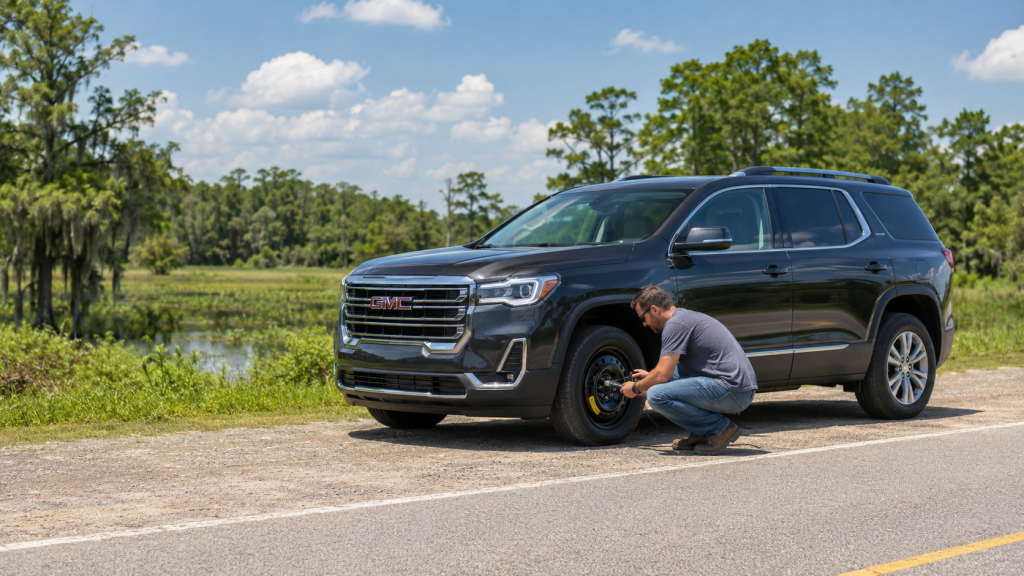
Start by checking all four tires when they are cold. Compare the pressure with the specification listed for your GMC. Additionally, inspect tread across the full width of each tire. Uneven wear may point to another service need that deserves attention before a long drive.
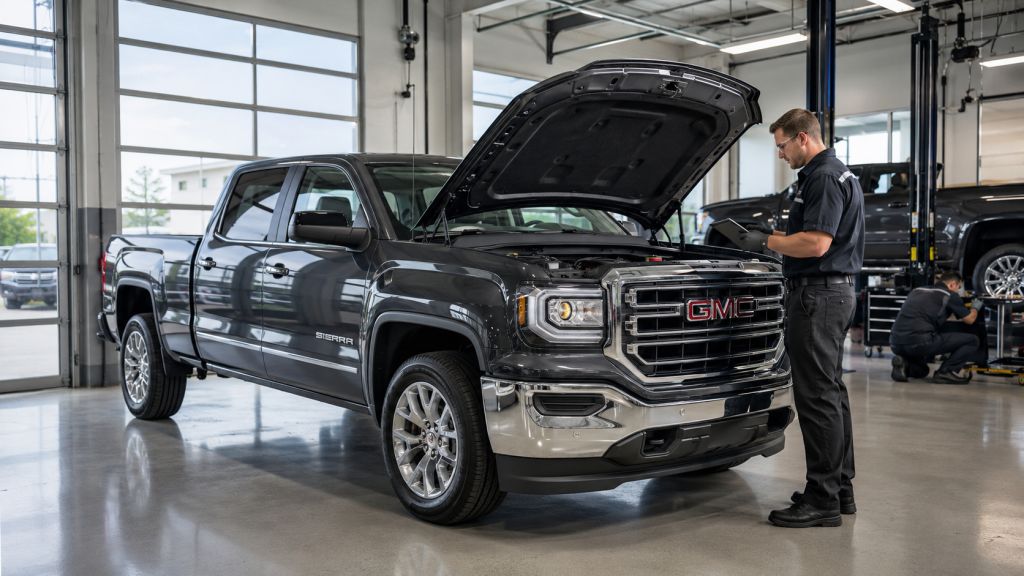
Brakes deserve the same review. Listen for grinding, squealing, or other unusual sounds during normal stops. However, sound alone does not confirm brake health. A service inspection can check pads, rotors, fluid, and related parts.
Wiper blades are just as important during intense rain. Replace blades that streak, skip, chatter, or leave large areas uncleared. In addition, fill the washer reservoir and test the spray pattern before you leave.
These checks matter because heavy rain can reduce how much time you have to react. Therefore, good tread, clear glass, and responsive brakes support safer travel.
Prepare for a Longer Evacuation Drive
A GMC maintenance schedule should also guide the service items that may already be due. An evacuation can add hours of driving in heat and traffic. Therefore, overdue maintenance deserves attention before a storm is close.
Check the oil life reading and compare current mileage with the service schedule. Additionally, review coolant, brake fluid, and other listed fluids for your model. Your Owner's Manual gives the correct schedule and specifications for your GMC.
Fuel planning also matters. Do not wait until evacuation traffic begins to think about filling the tank. Instead, keep enough fuel available to leave without an immediate stop. Gas stations may become crowded, and some may lose power during severe weather.
Before leaving, review these final travel items:
- Confirm oil life, fluid levels, fuel, tire pressure, and washer fluid.
- Pack charging cables, water, food, medication, flashlights, and a first aid kit.
- Save your primary route and an alternate route before cellular service becomes limited.
In addition, keep registration, insurance information, and emergency contacts easy to reach. A little preparation can shorten the list of decisions you must make later.
Build a GMC Hurricane Kit for the Road
A hurricane kit inside your truck or SUV should focus on time spent away from home. The goal is to cover basic needs during traffic, delays, or a longer evacuation route.
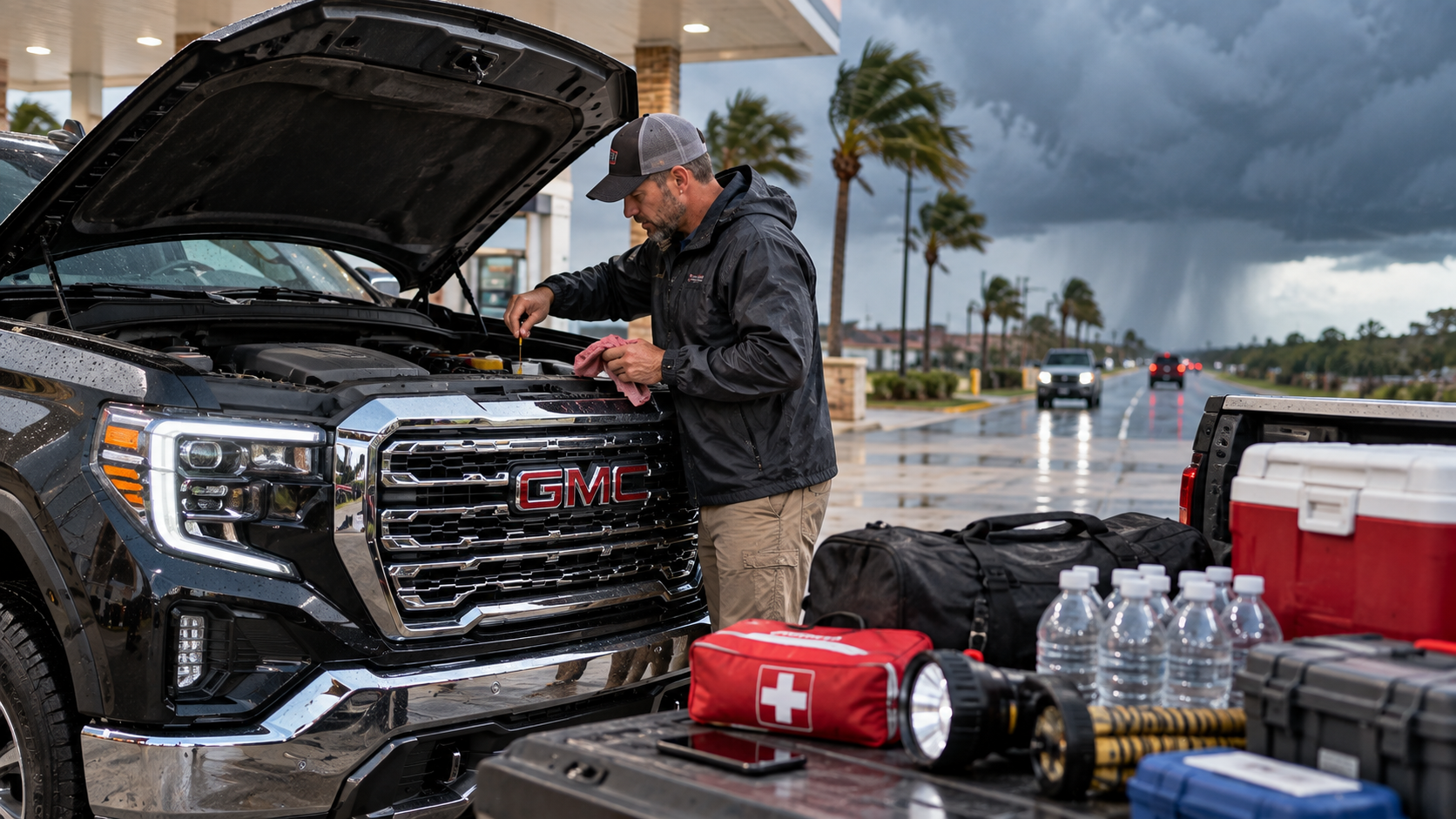
Water and nonperishable food should be easy to reach. Additionally, keep needed medication in a secure place that stays with you. Flashlights, charging cords, portable battery packs, and a basic first aid kit can support travel when power is limited.
In addition, children, older relatives, and pets can each add specific needs. Therefore, pack those supplies before a watch or warning creates a rush.
Keep the kit organized so important items are easy to find. Avoid burying medication or charging gear under luggage. Moreover, secure heavier objects so they do not move through the cabin during a sudden stop.
Never Treat Floodwater as a Truck Test
Can a GMC truck or SUV drive through floodwater? No truck or SUV should be used to test whether a flooded road is safe. Moving water can push a large pickup away, and standing water can hide severe road damage.
A taller ride height does not make an unknown flooded road safe. Water can cover washed out pavement, debris, sharp objects, or missing road edges. Therefore, turning around is the safer choice when water covers the roadway.
If flooding blocks your planned route, use official flood safety guidance and choose another path. Do not follow another driver into the water as proof that crossing is safe. In addition, never drive around barricades placed across flooded roads.
Storm preparation works best before the forecast creates urgency. Review your GMC maintenance schedule, inspect key service items, and pack your supplies early. Then, keep fuel available and know where you will go if evacuation becomes necessary. Ross Downing GMC of Gonzales can also inspect your GMC before hurricane travel. Early preparation gives you more options when the weather changes quickly.