



Choosing between the GMC Yukon and GMC Yukon XL comes down to how size translates into real-world use. Many shoppers comparing these full size SUVs are trying to understand what the added length of the GMC Yukon XL actually changes in terms of passenger space, cargo usability, and towing behavior. While both models share the same engines, technology, and overall design, differences in wheelbase and overall length directly affect how each vehicle performs on the road and how it supports everyday driving.
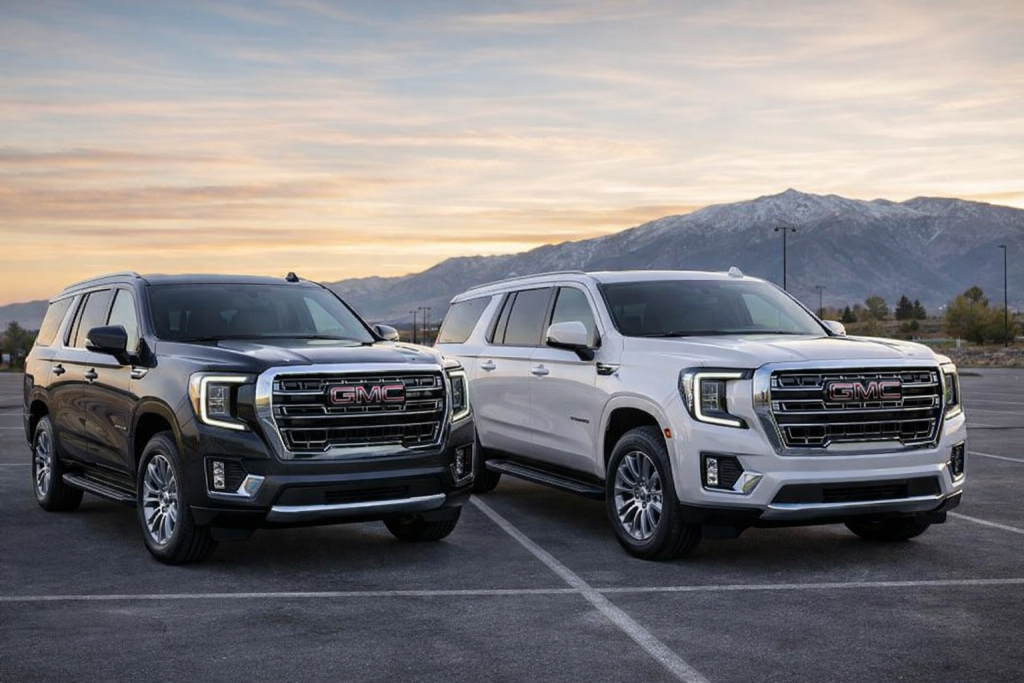
This guide breaks down how the GMC Yukon and GMC Yukon XL differ by explaining how their underlying structure influences comfort, storage, and capability.
Wheelbase and Size Differences Explained
Many shoppers ask what the difference between the GMC Yukon and GMC Yukon XL actually means in real-world driving. The key difference is wheelbase, which is the distance between the front and rear axles.
The GMC Yukon uses a shorter wheelbase, while the GMC Yukon XL extends that distance to create a longer overall frame. This change affects both ride quality and how interior space is distributed.
From a mechanical standpoint, a longer wheelbase allows the GMC Yukon XL to absorb road imperfections more gradually. Because the front and rear wheels encounter bumps at a greater distance apart, the vehicle experiences less abrupt vertical movement. This results in a smoother, more stable ride on highways and long-distance drives.
For shoppers comparing the two, the GMC Yukon feels easier to manage in tighter spaces, while the GMC Yukon XL prioritizes ride stability and expanded interior layout.
Cargo Space Usability in Real-World Scenarios
When comparing GMC Yukon cargo space to GMC Yukon XL cargo space, the most important difference appears behind the third row. While total cargo volume is often highlighted, usability with all seats occupied is what most families actually experience.
The GMC Yukon cargo area behind the third row is limited by the shorter rear overhang, meaning vertical stacking becomes necessary when carrying multiple items. In contrast, the GMC Yukon XL cargo area extends the load floor, allowing cargo to spread horizontally rather than vertically.
This changes how the space functions in everyday use:
- The GMC Yukon cargo space is best suited for smaller loads when all seats are occupied
- The GMC Yukon XL cargo space allows full-size luggage, sports gear, or bulkier items to fit without folding seats
- The extended cargo floor in the GMC Yukon XL improves load stability by reducing stacking height
For families traveling with multiple passengers, the GMC Yukon XL provides a more practical solution for maintaining both seating and storage capacity.
Passenger Comfort and Interior Space Distribution
Shoppers deciding between the GMC Yukon and GMC Yukon XL often ask which is better for families, especially on longer drives. The difference comes from how the extended wheelbase changes seat spacing and passenger positioning.
In the GMC Yukon XL interior, the added wheelbase increases the distance between seating rows. This allows engineers to adjust seat track placement and legroom distribution, particularly in the second and third rows. The result is more consistent spacing across all rows rather than prioritizing front-seat comfort.
Seat height and hip point positioning also benefit from the longer frame. With more room to position seats without compressing space between rows, passengers experience less knee bend and improved posture during long trips.
For family use, this leads to:
- More usable third-row seating for adult passengers
- Improved legroom balance between second and third rows
- Greater comfort during extended travel without frequent seat adjustments
The GMC Yukon interior remains comfortable for most needs, but the GMC Yukon XL interior is better suited for larger families or frequent long-distance travel.
Towing Capability and Stability Differences
Many buyers compare GMC Yukon towing capacity to GMC Yukon XL towing capacity and assume the experience will be identical. While both models can achieve similar maximum ratings when properly equipped, towing stability differs due to wheelbase length.
The GMC Yukon XL towing setup benefits from its longer frame, which improves weight distribution between the vehicle and trailer. A longer wheelbase increases the distance over which forces act on the vehicle, reducing the likelihood of trailer sway.
From a technical perspective, stability during towing is influenced by how the vehicle resists rotational forces caused by wind, road conditions, or trailer movement. The GMC Yukon XL’s extended wheelbase creates a larger moment arm, which helps the vehicle maintain a straighter path under load.
For drivers, this means:
- The GMC Yukon towing capability is strong for general use and moderate loads
- The GMC Yukon XL towing stability provides more control when hauling heavier trailers
- The GMC Yukon XL offers increased confidence during highway towing and long-distance trips
If towing is a frequent requirement, the added stability of the GMC Yukon XL becomes a meaningful advantage.
Daily Driving, Parking, and Maneuverability Tradeoffs
A common concern when comparing the GMC Yukon vs GMC Yukon XL is whether the added size makes the vehicle harder to drive. This difference is largely tied to turning radius and overall length.
The GMC Yukon turning radius is slightly tighter because of its shorter wheelbase. A shorter distance between axles allows the front wheels to change direction more efficiently, requiring less space to complete a turn.
The GMC Yukon XL turning behavior requires a wider arc. Because the rear axle is positioned farther from the front, the vehicle needs more space to rotate during low-speed maneuvers such as parking or navigating tight lots.
In everyday driving:
- The GMC Yukon is easier to park and maneuver in urban environments
- The GMC Yukon XL requires more awareness in confined spaces but remains manageable with driver assistance features
- Both models benefit from camera systems and sensors that reduce the impact of size differences
Most drivers adapt quickly, but those frequently driving in tight areas may prefer the GMC Yukon.
Is the GMC Yukon XL Worth the Extra Size
Many shoppers ultimately want to know if the GMC Yukon XL is worth the additional length. The answer depends on how often space, passenger capacity, and towing stability are priorities.
The GMC Yukon is a strong fit for drivers who want full size capability with easier maneuverability for daily use. It balances space and usability in a way that works well for mixed driving environments.
The GMC Yukon XL is worth it for shoppers who regularly need maximum cargo space behind the third row, improved passenger comfort across all seating positions, or increased stability when towing. Its longer wheelbase delivers measurable benefits in how the vehicle carries passengers, manages cargo, and handles heavier loads.
Understanding how these structural differences affect real-world driving is the key to choosing the right model. Both vehicles are capable, but the right choice depends on whether your priorities lean toward flexibility in tight spaces or maximizing space and stability.


