



When Gonzales drivers begin comparing GMC SUVs, the decision usually starts with size. But space alone is not enough. Buyers evaluate three measurable categories: passenger capacity and cargo volume, safety system integration, and overall pricing tier relative to long-term ownership needs.
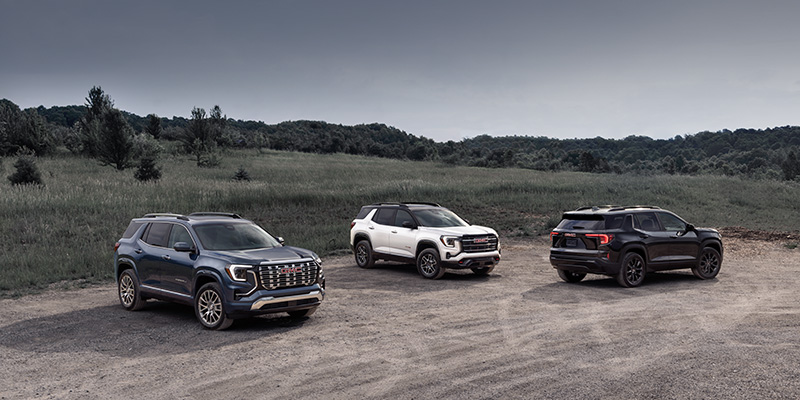
The GMC SUV lineup spans compact to full-size. Understanding the structural differences between the GMC Terrain, GMC Acadia, and GMC Yukon helps align the vehicle with daily use rather than simply choosing the largest option available.
Compact vs Midsize vs Full-Size: What That Actually Means
Compact SUVs such as the Terrain are engineered for efficiency, maneuverability, and daily commuting practicality. Wheelbase length and overall body width are optimized for urban driving.
Midsize SUVs like the Acadia introduce third-row seating while maintaining moderate exterior dimensions.
Full-size SUVs such as the Yukon ride on truck-based architectures with body-on-frame construction. They provide maximum towing and interior volume but require more parking and maneuvering space.
Choosing the correct category determines how comfortable the SUV feels in everyday traffic and long-distance travel.
GMC Terrain: Compact Efficiency and Everyday Practicality
The Terrain is a five-passenger compact SUV powered by a turbocharged four-cylinder engine.
Key Characteristics:
- Two-row seating
- Strong fuel efficiency compared to larger SUVs
- Manageable footprint for city parking
- Available all-wheel drive
Cargo capacity behind the second row supports groceries, sports equipment, and moderate travel needs. Fold-flat rear seats expand storage when needed.
For small families or commuters who prioritize fuel economy and ease of driving, the Terrain provides practical balance.
GMC Acadia: Three-Row Midsize Flexibility
The Acadia occupies the middle of the lineup. It introduces standard three-row seating in its current generation.
Highlights:
- Seating for up to seven depending on configuration
- Larger cargo capacity than Terrain
- Turbocharged engine tuned for responsive torque
- Available advanced driver assistance systems
- Google built-in infotainment integration
The third row provides flexibility for carpooling or extended family trips. Cargo space increases significantly when rear seats are folded.
For buyers who need occasional third-row seating but do not require full-size SUV dimensions, the Acadia bridges the gap effectively.
GMC Yukon: Full-Size Capability and Maximum Space
The Yukon is engineered on a full-size platform with substantial towing and interior volume capability.
Key Structural Advantages:
- Body-on-frame construction
- V8 engine options
- Independent rear suspension in current generation
- Seating for up to eight passengers
- Significant cargo capacity even with third row in place
Independent rear suspension dramatically improved third-row legroom and ride comfort in newer Yukons.
For large families, RV owners, or drivers towing boats and trailers, the Yukon offers the highest capacity in the lineup.
Cargo Space Comparison
Cargo capacity often determines final decisions.
Terrain:
- Designed for daily storage needs
- Ideal for compact SUV buyers
Acadia:
- Usable cargo space behind third row
- Expands substantially when rear rows fold
Yukon:
- Generous cargo capacity even with full passenger load
- Maximum storage volume when rear seats fold flat
Families who regularly travel with luggage, strollers, or sports equipment benefit from understanding real usable cargo dimensions rather than relying on seat count alone.
Safety Systems Across the GMC SUV Lineup
Safety integration is consistent throughout the lineup.
Standard and available systems may include:
- Forward collision alert
- Automatic emergency braking
- Lane keep assist
- Blind zone steering assist
- Rear cross traffic braking
- Adaptive cruise control
Higher trims and larger SUVs often introduce expanded features such as Super Cruise hands-free driving capability on compatible highways.
Safety is not limited to size. Even compact models integrate advanced driver assistance features.
Engine and Fuel Economy Tradeoffs
Terrain:
- Turbocharged four-cylinder
- Highest fuel efficiency in the lineup
Acadia:
- Turbocharged engine with increased output
- Balanced fuel economy for a midsize three-row SUV
Yukon:
- V8 engine options
- Greater towing strength
- Lower fuel economy compared to compact and midsize options
Fuel economy differences scale with vehicle mass and engine displacement. Buyers balancing long commutes with occasional towing should evaluate how often maximum capability is truly needed.
Pricing Tiers and Trim Strategy
Each SUV is available in trims such as:
- Elevation
- AT4
- Denali
Pricing increases with:
- Interior material upgrades
- Advanced technology integration
- Premium audio systems
- Enhanced suspension systems
Compact SUVs typically begin at lower price tiers, midsize models occupy middle pricing brackets, and full-size SUVs represent the highest investment due to structural complexity and engine size.
The key is determining whether additional size and capability justify the increased cost based on daily use.
All-Wheel Drive Availability
All three models offer available all-wheel drive configurations.
All-wheel drive benefits:
- Improved traction in wet conditions
- Added confidence on rural roads
- Better stability under certain towing conditions
Drivers in regions with varying weather patterns often prioritize AWD as part of their evaluation process.
How Gonzales Buyers Make the Final Choice
Shoppers typically evaluate:
- Number of passengers transported weekly
- Amount of cargo carried regularly
- Towing needs
- Commute length and fuel cost sensitivity
- Parking space availability
- Long-term ownership budget
Choosing the right GMC SUV is less about selecting the largest model and more about aligning platform size with real-world demand.
Compact efficiency, midsize flexibility, and full-size capability each serve distinct purposes. Understanding those structural and performance differences ensures confident decision-making based on lifestyle rather than assumption.


