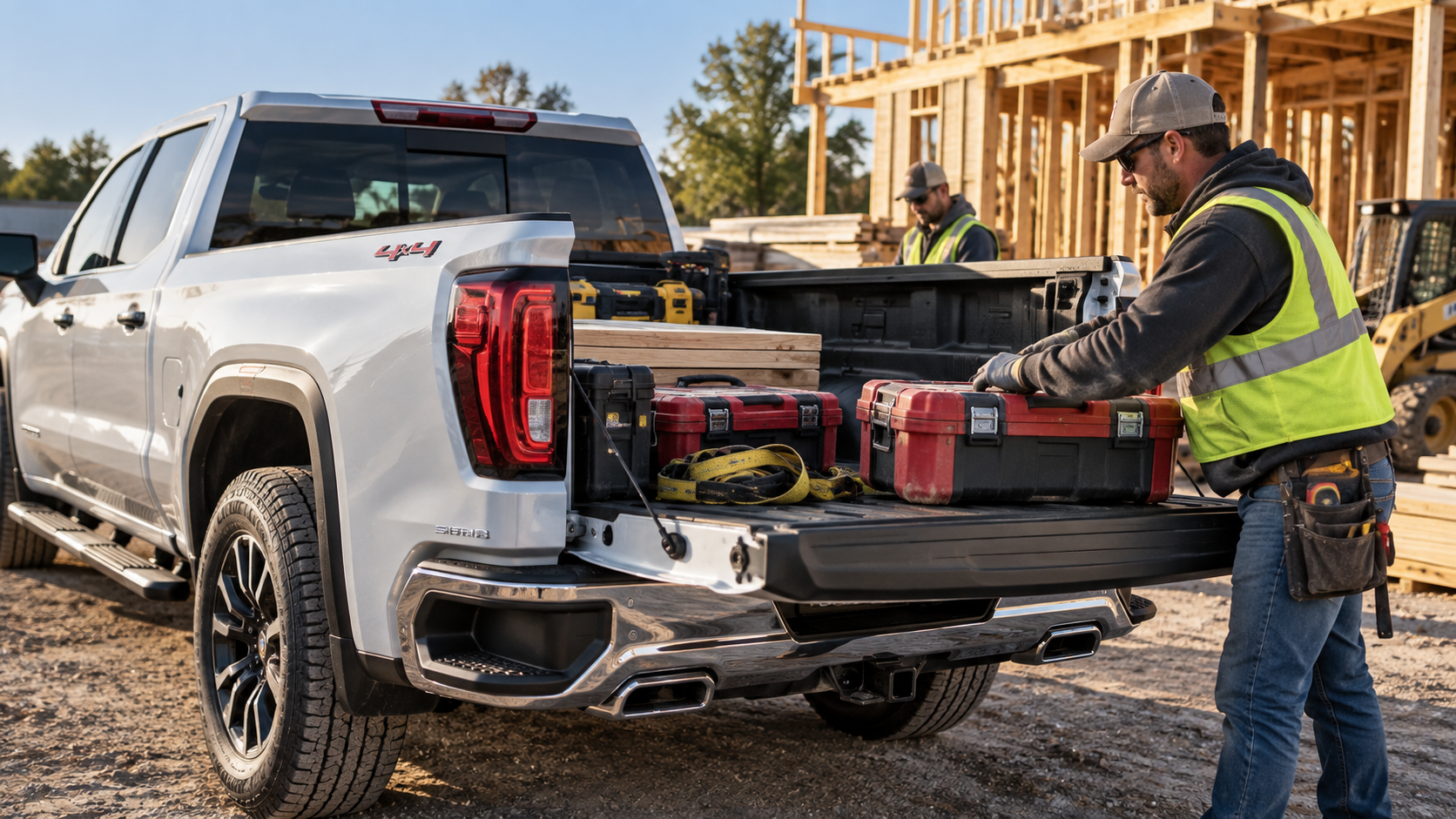



GMC commercial fleet incentives can lower certain vehicle or equipment costs when a qualifying business adds a Sierra. The first step is not choosing an offer. It is defining the work the truck must handle. Towing needs, payload, daily mileage, cab size, and employee use all shape the purchase. In addition, the business should review financing, tax questions, and service needs before signing. Start With the Work Your Sierra Needs to Do A work truck should match the tasks it will handle each day. That starts with the load, trailer, passengers, tools, and miles involved. A landscaping company may need bed space and towing hardware. A contractor may care more about cab space, tool storage, and jobsite access. A sales or service team may spend more time on highways and customer visits. Before choosing a Sierra trim, define the core work: List the trailer weights, payload needs, tools, and cargo the truck must carry. Confirm how many employees will ride in the truck and how much cab space they need. Estimate annual mileage, jobsite travel, highway travel, and time spent behind the wheel. These details create a clear starting point. Therefore, the truck can be matched to actual work instead of trim names alone. In addition, this approach makes later financing and incentive discussions easier because the business already knows what it needs. Which GMC Sierra Trim Fits a Small Business? The right Sierra trim depends on the truck's workload, employee use, towing needs, and equipment requirements. GMC offers several Sierra 1500 trims that can serve different business roles. Pro, SLE, Elevation, and SLT each add different cabin, technology, and powertrain content. Sierra Pro keeps the focus on core truck hardware and straightforward equipment. That can make sense for a business that needs a work focused pickup without many added cabin features. SLE adds more interior technology and comfort content. Therefore, it can fit employees who spend more hours driving between jobs. Elevation adds a more distinctive exterior look along with added cabin content. That can suit a business truck that also appears at customer appointments or public facing work. SLT adds more standard equipment and a V8 powertrain in many configurations. In addition, its cabin can fit owners or employees who spend long days on the road. The strongest trim choice comes from the job itself. A business should compare payload, towing, cab size, bed length, drivetrain, and included equipment. Then, it can decide whether added cabin content is worth the added cost. What Fleet Incentives Can a Small Business Use? Available incentives depend on fleet eligibility, vehicle qualification, program rules, and the specific purchase or upfit. GM Fleet uses a Fleet Account Number for access to several fleet programs. Therefore, a business should verify eligibility before assuming a listed offer applies. Business Choice can also support certain work related purchases. Current GM Fleet materials show accessory or upfit allowances on qualifying vehicles. For some Sierra light duty trucks, that money can be applied toward eligible equipment tied to the truck's job. Before using an offer, verify these items: Confirm whether the business qualifies for a Fleet Account Number and whether the vehicle qualifies for the program. Review the exact allowance amount, eligible accessories, approved upfits, and program dates. Ask whether the offer can be combined with other fleet or retail incentives on the same transaction. This matters because a work truck may need more than the truck itself. Bed protection, steps, storage, towing hardware, or another approved upfit can add to the total purchase cost. Therefore, an accessory or upfit allowance may support a specific work need. Compare Commercial Financing and Leasing Paths A business can fund a Sierra in more than one way. GM Financial offers commercial financing, leasing, and fleet credit options for qualifying customers. Each path changes cash flow, vehicle ownership, and how easily a business can add more trucks later. Traditional financing spreads the purchase over a set term. At the end, the business owns the truck once the balance is paid. Leasing follows a different structure. The business makes payments for the agreed term and follows the mileage and return terms in the contract. Fleet credit can support companies that expect to add several vehicles. A qualifying business may use one credit line for multiple fleet purchases or leases. Therefore, the structure can simplify borrowing as the number of vehicles grows. Before choosing a funding path, review: How much cash the business wants to keep available after the purchase. How many miles the truck is likely to travel each year. Whether the business expects to keep the Sierra for many years or replace it on a set cycle. The financing choice should match the company's cash plan and vehicle plan. In addition, the business should review fees, mileage terms, interest costs, and contract details before signing. Review Tax and Ownership Costs Before You Buy Federal tax rules can change the math for a business vehicle. GMC currently lists qualifying Sierra configurations under Section 179 and bonus depreciation guidance. However, the exact treatment depends on the truck configuration and the business's tax situation. Bed length and vehicle weight can matter. In addition, business use percentage and placed in service timing can matter. A Sierra 1500 Standard Bed or Long Bed may fall under different Section 179 treatment than a Short Bed configuration. Therefore, a tax professional should review the exact vehicle before the business relies on a deduction. Before purchase, the business should also review: The exact VIN, bed configuration, and vehicle weight data tied to the truck. The expected business use percentage and the date the truck will enter service. The maintenance, fuel, insurance, registration, and replacement costs that will continue after purchase. Tax savings should never be assumed from the model name alone. Instead, the business should verify the truck and the rules with a qualified tax professional. A Sierra can serve as a single company truck or the first vehicle in a growing fleet. Therefore, the purchase should connect the truck, financing structure, available incentives, and future operating costs. Ross Downing GMC of Gonzales can review current Sierra inventory and available commercial programs with local business owners. With the right information in hand, a company can choose a truck that fits the work. It can also keep the purchase within its planned budget.