



Choosing between the GMC Terrain and GMC Acadia comes down to how size, seating, and capability translate into everyday use. Many shoppers comparing these SUVs are trying to understand what the difference between a compact SUV and a midsize SUV actually means when it comes to commuting, family needs, and long-term ownership. While both models reflect GMC’s focus on practical design and modern technology, the way each vehicle is engineered creates very different outcomes in how they handle daily driving, passenger space, cargo flexibility, and towing capability.
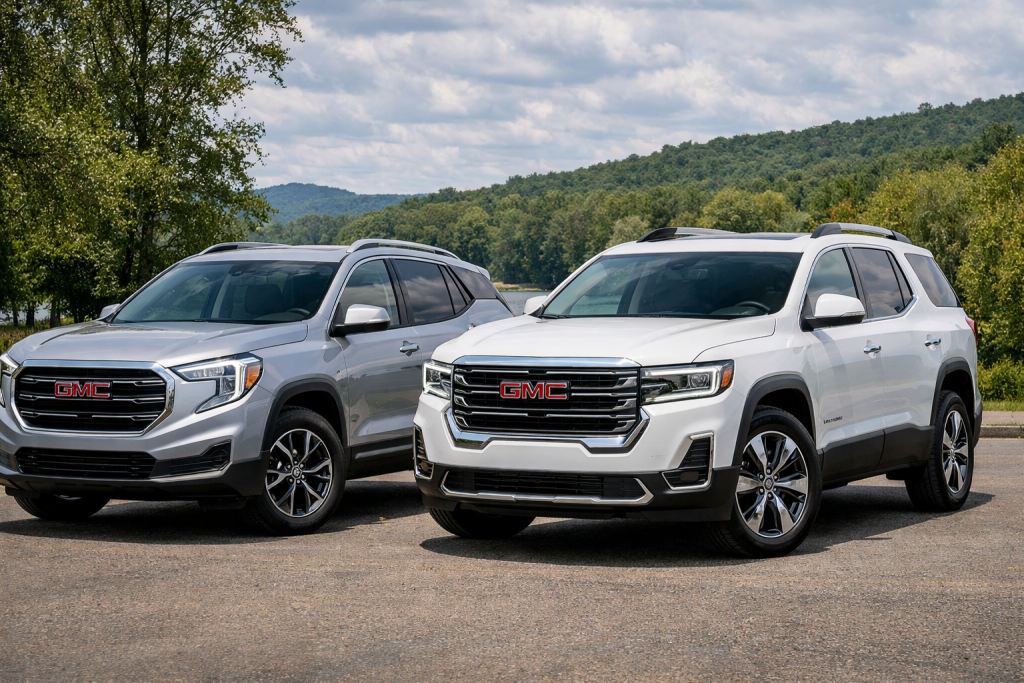
This guide breaks down how the GMC Terrain and GMC Acadia differ by explaining how their structure and intended purpose affect real-world driving and ownership decisions.
Compact SUV vs Midsize SUV: What Changes in Real Driving
Many shoppers ask what the difference between the GMC Terrain and GMC Acadia actually means beyond size. A compact SUV is a smaller two-row vehicle designed for efficient daily driving and easier maneuverability, while a midsize SUV is a larger vehicle that prioritizes passenger capacity and expanded interior space, often with a third row.
The GMC Terrain compact SUV uses a shorter overall length and tighter wheelbase, which directly improves turning behavior and parking control. A shorter wheelbase reduces the distance between axles, allowing the GMC Terrain to rotate more easily during low-speed maneuvers such as navigating parking lots or making tight turns.
The GMC Acadia midsize SUV uses a longer wheelbase and larger overall body structure. This increases interior volume but also requires a wider turning arc. The added length changes how the vehicle behaves in confined environments, requiring more space to complete turns and park.
For daily driving, this creates a clear distinction. The GMC Terrain daily driving fit favors drivers who regularly navigate tight spaces, while the GMC Acadia daily driving experience prioritizes interior room and stability over compact maneuverability.
Passenger Space and Seating Needs
Shoppers often ask which GMC SUV is better for families, and the answer depends on how many passengers you need to accommodate on a regular basis. The GMC Terrain seating capacity supports up to five passengers across two rows, while the GMC Acadia three-row seating expands capacity up to eight passengers.
The difference is not just in seat count but in how the cabin is arranged. The GMC Terrain interior focuses on maximizing space within a two-row layout, creating a more open cargo area behind the second row. In contrast, the GMC Acadia interior distributes space across three rows, which requires a different balance between passenger seating and cargo storage.
From a design standpoint, adding a third row changes how seat spacing and legroom are allocated. The GMC Acadia uses a longer cabin to maintain usable second- and third-row seating positions, while the GMC Terrain concentrates space into fewer rows for a more open rear cargo area.
For buyers evaluating family use, consider how seating needs change over time:
- The GMC Terrain seating layout works well for individuals, couples, or smaller families with occasional rear passenger use
- The GMC Acadia three-row layout supports larger households, carpooling, and situations where multiple passengers are a regular part of daily driving
Choosing between the two comes down to whether you need consistent passenger capacity or prefer a more flexible two-row layout.
Cargo Flexibility for Daily Use and Travel
Many shoppers compare GMC Terrain cargo space and GMC Acadia cargo space without understanding how differently that space functions. Cargo flexibility depends on whether the vehicle is configured for passengers or storage at any given time.
The GMC Terrain cargo space benefits from its two-row design. With no third row in place, the rear cargo area remains open and accessible, allowing larger items to fit without reconfiguring seating. This makes the GMC Terrain well suited for everyday errands, grocery trips, and transporting gear without sacrificing passenger space.
The GMC Acadia cargo space offers significantly more total volume, but that capacity is tied to seat configuration. With all three rows in use, cargo space is more limited. As seats are folded, the available cargo area expands, allowing the GMC Acadia to carry larger loads when fewer passengers are present.
This creates two distinct use cases:
- The GMC Terrain cargo setup provides consistent, always-available storage behind the second row
- The GMC Acadia cargo setup provides maximum flexibility when alternating between passenger transport and larger cargo loads
For buyers who regularly carry passengers and cargo together, understanding this tradeoff is critical to choosing the right SUV.
Performance, Power, and Towing Differences
Another key question is how the GMC Terrain towing capacity compares to the GMC Acadia towing capacity and what that means for real-world use. Towing capacity is the maximum weight a vehicle can pull when properly equipped, and it reflects both engine output and structural design.
The GMC Terrain towing capacity reaches up to 1,500 pounds, which aligns with its role as a compact SUV focused on daily driving. This level of capability supports lighter loads such as small utility trailers, bike racks, or compact recreational equipment.
The GMC Acadia towing capacity reaches up to 5,000 pounds when properly equipped, reflecting its larger engine output and stronger chassis design. The GMC Acadia engine produces significantly more power, allowing it to handle heavier loads such as small campers, larger trailers, or multiple recreational vehicles.
From a mechanical perspective, towing capability depends on how the vehicle manages load forces across the frame and drivetrain. The GMC Acadia’s larger structure distributes those forces more effectively, improving stability and control under heavier loads.
For buyers comparing capability, the distinction is clear. The GMC Terrain supports light-duty utility, while the GMC Acadia is designed for more demanding towing scenarios and heavier family-use applications.
Which GMC SUV Makes More Sense for Your Driving Routine
Many shoppers ultimately want to know whether the GMC Terrain or GMC Acadia is the better choice for their lifestyle. The answer depends on how often space, passenger capacity, and capability are needed versus how important daily driving convenience is.
The GMC Terrain is the right fit for drivers who prioritize:
- Easier maneuverability in parking lots and urban environments
- A consistent cargo area without needing to reconfigure seating
- A right-sized SUV for commuting and smaller households
The GMC Acadia is the better fit for drivers who need:
- Three-row seating for larger families or frequent passengers
- Greater cargo capacity when seats are folded for travel or gear
- Stronger towing capability for recreational or utility use
Understanding how each SUV is engineered for different types of use is the key to making the right decision. The GMC Terrain delivers efficiency and simplicity for everyday driving, while the GMC Acadia provides the space and capability needed for expanding families and more demanding workloads.


