



3500 vs 2500 HD comparisons usually begin with towing numbers, but Louisiana buyers hauling equipment, trailers, and commercial loads also need to understand payload structure, rear axle support, and dually stability before upgrading. Sierra HD trucks may appear very similar visually, yet the differences underneath the chassis change how each truck manages heavy pin weight, suspension load transfer, trailer stability, and long duration hauling situations. Contractors, agricultural operators, and equipment haulers should evaluate far more than the advertised tow rating before choosing between these heavy duty GMC trucks.
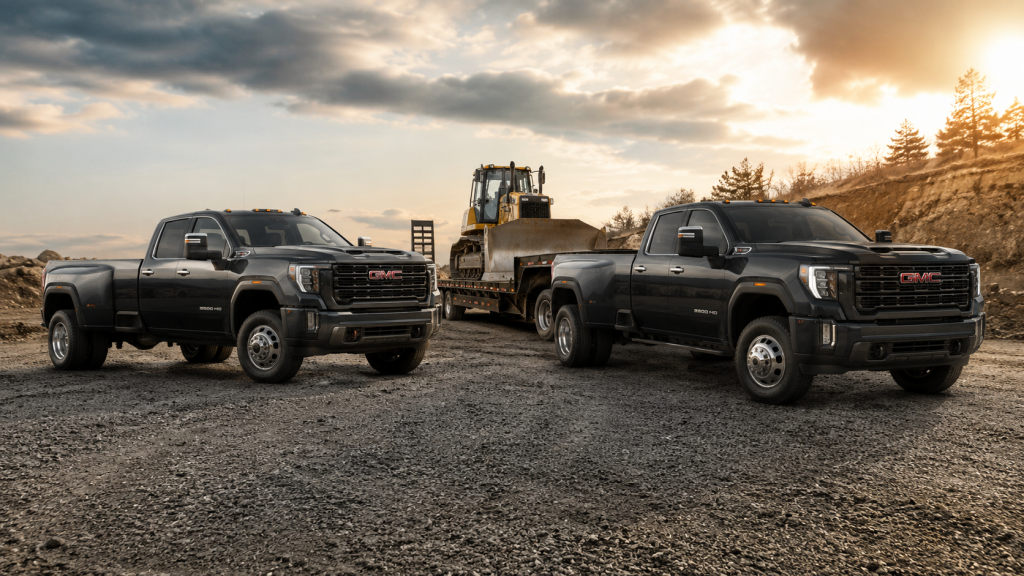
Payload and Towing Differences Shape Truck Selection
What is the difference between the Sierra 2500 HD and 3500 HD? The largest differences involve payload support, rear suspension capacity, axle load handling, and how the truck manages heavier trailer weight pressing downward into the chassis.
Tow ratings receive most of the attention during truck research, but payload becomes equally important once larger trailers enter the equation. Payload refers to the amount of weight carried directly by the truck itself. This includes passengers, cargo, hitch equipment, fuel, and trailer pin weight pressing into the bed through fifth wheel or gooseneck towing setups.
A GMC Sierra 2500 HD supports substantial towing and hauling work already, making it a strong fit for equipment trailers, medium commercial loads, enclosed utility trailers, and moderate fifth wheel towing. The Sierra 3500 HD pushes beyond that range through stronger rear load support and higher payload thresholds.
This matters because trailer weight does not transfer evenly. Fifth wheel and gooseneck trailers place a large portion of their weight directly onto the truck’s rear axle. Once heavier commercial trailers enter the picture, payload limitations may be reached before maximum tow ratings are even approached.
Louisiana buyers towing:
• Equipment trailers
• Livestock trailers
• Large campers
• Construction machinery
• Heavier enclosed haulers
should evaluate payload ratings carefully alongside overall trailer weight.
Rear axle structure, spring calibration, and frame support all contribute to how these Sierra HD trucks carry concentrated vertical load during towing.
Dual Rear Wheels Change Stability Under Heavy Load
When does a dually become necessary? A dually becomes more appropriate once trailer pin weight, heavy payload demands, or commercial hauling situations create stability demands beyond what a single rear wheel setup manages comfortably.
The GMC Sierra 3500 HD introduces available dual rear wheels to spread heavier load forces across a wider rear contact area. Instead of one tire per side at the rear axle, the dually configuration uses two rear tires on each side.
That wider footprint changes how the truck manages trailer movement. Larger fifth wheel trailers create side to side force during crosswinds, uneven pavement, highway lane changes, and trailer sway situations. Dual rear wheels create greater lateral stability because the rear axle distributes weight across a broader stance.
This becomes noticeable during:
• Highway crosswind exposure
• Heavier trailer tongue weight
• Uneven road surfaces
• Long distance hauling
• Emergency steering correction situations
The wider rear axle support also changes how the truck settles under heavier loads. Rear suspension compression feels more controlled because weight distribution spreads across additional tire surface area.
Buyers researching GMC dually towing should understand that the additional wheels are not simply increasing towing numbers. The configuration changes how the truck physically manages trailer movement and vertical load transfer under demanding hauling situations.
Fifth Wheel Towing Pushes Buyers Toward the 3500 HD
Why does payload matter during towing? Payload matters because fifth wheel and gooseneck trailers place concentrated downward weight directly into the truck bed through the hitch assembly.
This vertical force is called pin weight. Heavier trailers create larger pin weight loads pressing into the rear suspension and axle structure. A buyer may still remain inside the advertised towing limit while exceeding payload limits due to hitch weight concentration.
That distinction creates confusion during heavy duty diesel truck comparison research because tow ratings alone do not explain how the truck manages weight distribution internally.
The Sierra 3500 HD becomes more valuable once hauling situations include:
• Large multi axle campers
• Commercial flatbed trailers
• Heavier skid steer transport
• Agricultural hauling
• Long distance equipment towing
The heavier rear suspension calibration and increased payload support allow the truck to maintain better chassis posture while carrying larger vertical loads.
Single rear wheel Sierra 3500 HD models still provide increased payload structure compared to many 2500 HD configurations. Buyers do not automatically need a dually simply because they upgrade into a 3500 series truck. The workload itself determines whether the additional rear wheel support becomes worthwhile.
Trailer setup also matters substantially. Improper weight distribution, overloaded cargo placement, or incorrect hitch balance can destabilize even larger heavy duty trucks.
Daily Driving Feels Different Between These HD Trucks
Is a Sierra 3500 HD harder to drive daily? The driving experience changes most noticeably with dually models because the truck becomes wider at the rear axle and occupies more physical space during parking, lane positioning, and tighter maneuvering situations.
Single rear wheel Sierra 2500 HD and Sierra 3500 HD trucks feel fairly close during ordinary driving. Steering response, parking routines, and overall maneuverability remain manageable for buyers already comfortable driving heavy duty pickups.
The dually configuration changes that ownership routine more dramatically. Rear fender width extends farther outward, making parking spaces, drive through lanes, and tighter urban streets require additional attention.
Louisiana contractors using their truck for both work and personal commuting should think carefully about where the truck spends most of its time. Frequent downtown driving, crowded parking lots, and tighter residential environments create very different priorities than daily trailer hauling.
Drivers moving into a dually setup should evaluate:
• Parking width requirements
• Garage clearance space
• Trailer towing frequency
• Highway hauling mileage
• Urban commuting routines
The Sierra 3500 HD rewards buyers carrying heavier workloads regularly. Buyers pulling moderate trailers only a few times per year may find the 2500 HD easier to integrate into everyday driving situations.
What Louisiana Contractors Should Evaluate Before Upgrading
What should contractors evaluate before upgrading? Buyers should evaluate trailer type, payload concentration, hauling frequency, highway mileage, and how often the truck operates near heavier weight thresholds.
The correct GMC HD truck depends heavily on workload repetition. Contractors transporting heavier equipment daily create much different rear axle demands than buyers occasionally towing recreational trailers on weekends.
The Sierra 2500 HD handles substantial towing and hauling responsibilities already. The Sierra 3500 HD becomes more appropriate once payload concentration, fifth wheel weight transfer, and trailer stability demands increase substantially.
Louisiana buyers should also evaluate future workload growth. Equipment upgrades, larger trailers, heavier machinery, or expanding commercial operations may push truck requirements beyond current hauling needs sooner than expected.
For buyers visiting Ross Downing GMC Gonzales, comparing Sierra HD configurations in person creates a clearer understanding of how payload support, suspension structure, rear wheel setup, and towing stability change between these heavy duty GMC trucks. Looking beyond maximum tow ratings creates a more accurate picture of which truck truly matches the hauling workload ahead.


