



How long can you drive on a spare tire after a flat in Louisiana? The exact limit comes from the spare sidewall and your vehicle owner’s manual. Many compact spares list a speed limit near 50 mph. However, the permitted distance can vary by tire and vehicle.
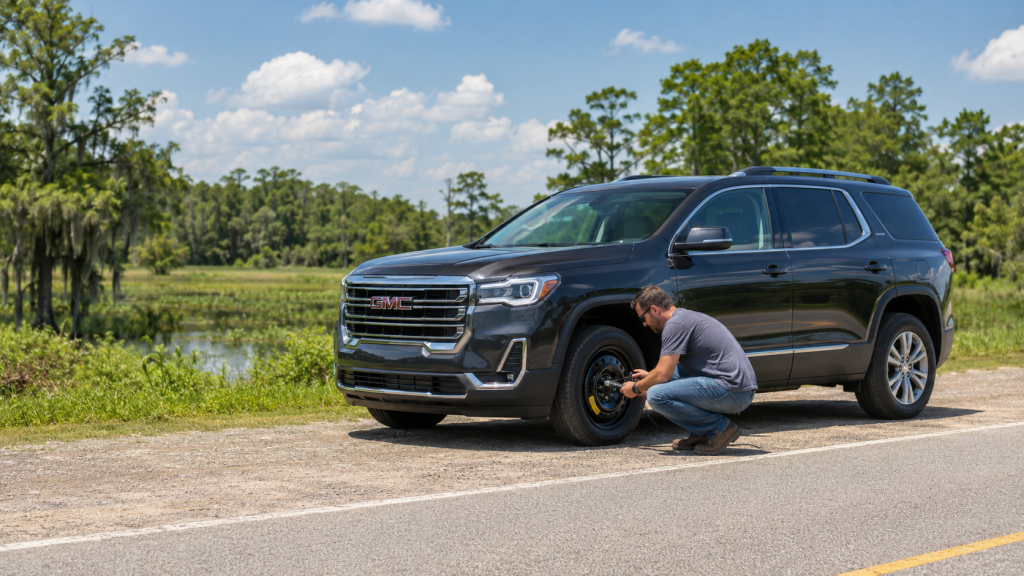
A spare restores short term mobility after tire damage. It does not replace a permanent tire repair. Therefore, travel only far enough to reach a safe inspection location.
How Spare Type Changes the Answer
Spare tire type controls how the vehicle should be driven after a flat. Compact temporary spares and full size spares serve different roles.
A compact spare has a smaller wheel and narrower tread than the normal road tires. It may also carry a much higher inflation requirement. Therefore, its sidewall must receive close review before travel.
A full size spare may match the other four tires. However, its age, pressure, tread depth, and load rating still need inspection. A spare stored for years can lose air without visible damage.
Check these details before moving:
- Read the maximum speed printed on the spare sidewall.
- Find the spare tire instructions inside the owner’s manual.
- Measure pressure with a tire gauge before entering traffic.
- Confirm that the tire has no cracks, bulges, cuts, or exposed material.
- Check whether cargo or trailer limits apply during spare tire travel.
Some vehicles carry a full size wheel with a different tire or tread pattern. Therefore, matching wheel size alone does not prove unrestricted travel. Follow the manual until a tire professional reviews the setup.
Why Compact Spares Have Strict Limits
Why does a compact spare change how the vehicle moves? Its smaller dimensions alter grip, braking response, and wheel rotation.
A narrower tread places less rubber against the road. Therefore, traction may feel different during braking or cornering. Wet pavement can make that difference easier to notice.
The spare may also rotate at a different rate than the other tires. That difference can place added strain on driveline parts. For this reason, the manual may limit speed, distance, or axle placement.
High speed creates more tire flex and heat. Additionally, hard braking transfers force quickly through the smaller tire. Sharp turns can also place greater load across its narrow contact area.
Drive smoothly and leave more stopping room. Avoid sudden steering, rapid acceleration, and rough pavement when possible. Still, do not remain on an unsafe shoulder longer than necessary.
A compact spare should support a direct trip to tire service. It should not support errands, commuting, or delayed repair plans.
How Louisiana Heat Changes Tire Stress
Louisiana summer heat raises pavement and tire temperatures during travel. However, heat does not create one universal distance reduction for every spare.
Correct inflation becomes more important during hot travel. An underinflated tire flexes more with each rotation. Consequently, added flex creates internal heat and places more stress on the tire.
Check spare pressure before a trip whenever possible. The best reading comes while the tire is cold. That means the vehicle has remained parked for several hours.
Do not release air from a warm tire simply because the reading looks high. Heat can raise pressure after driving. Releasing warm air may leave the tire too low after cooling.
A compact spare may require far more pressure than the normal road tires. Therefore, never copy the regular tire pressure without checking the spare label.
Sunlight and trunk heat can also age stored rubber. Cracks, hard rubber, or sidewall damage require professional review. Visible tread alone does not prove that an old spare remains ready.
Highway Travel Loads and Towing Need Extra Care
Can you drive on the interstate with a compact spare? The answer rests on the spare speed limit and the safest route to service.
Traffic may move faster than the spare permits. Therefore, a nearby surface route may offer a safer path. Choose a route that keeps speed within the printed limit.
Heavy cargo adds more weight across the tires. Passengers, tools, luggage, and recreational gear can raise tire strain. Consequently, a loaded GMC truck or SUV may need a different roadside plan.
Trailer travel requires even greater caution. A trailer adds tongue weight and changes steering, braking, and stability. The owner’s manual may restrict towing while a temporary spare is installed.
Do not assume the restored tire shape means full towing support has returned. Instead, stop in a safe location and review the manual. Roadside assistance may provide the safer route when towing limits remain unclear.
Tire pressure monitoring may not read the spare. Therefore, the absence of a warning light does not prove correct pressure. A manual gauge remains necessary.
Warning Signs That Mean Stop Driving
A spare may develop trouble before reaching its printed distance. Therefore, pay attention to new movement, sound, and steering changes.
Stop in a safe location when you notice:
- Strong vibration through the steering wheel, seat, or floor.
- Pulling that makes the vehicle difficult to keep straight.
- Repeated thumping, scraping, rubbing, or flapping sounds.
- Rapid pressure loss or a tire pressure warning.
- A visible bulge, crack, cut, or damaged sidewall.
- Smoke, burning odor, or unusual heat near the wheel.
Do not continue solely because the service location is close. A damaged spare can fail without much warning. Therefore, move away from traffic and request roadside help.
Also stop when the tire contacts bodywork or brake parts. Incorrect installation or wheel fit can create immediate damage. Loose wheel fasteners can also cause vibration and wheel movement.
After installation, recheck that the wheel sits flat against the mounting surface. Follow the tightening steps listed for the vehicle. A service professional should verify the installation soon afterward.
When Permanent Tire Service Should Happen
Permanent tire service should happen at the nearest reasonable opportunity. A compact spare exists for emergency travel only.
A tire professional must inspect the damaged road tire before approving repair. Puncture location, puncture size, internal damage, tread depth, and prior repairs all enter that decision.
Sidewall damage usually requires replacement because that area flexes during travel. Driving without enough air can also damage the inside of the tire. Therefore, a small visible puncture may hide larger internal harm.
Bring these details to the service visit:
- Where the pressure loss first appeared.
- How far the vehicle traveled after the warning.
- Whether the tire became fully flat.
- Whether sealant entered the damaged tire.
- Whether the spare produced noise, vibration, or steering changes.
Ross Downing GMC Gonzales can inspect the damaged tire, check the spare, and review replacement options. The service team can also confirm inflation requirements for the exact GMC.
A spare tire should shorten the roadside emergency, not extend it. Follow the printed limits, reduce speed, and avoid added load. Then arrange permanent tire service before normal travel resumes.


