


Dealership service communication shapes how customers understand repair timelines, estimate approvals, technician findings, and vehicle status throughout the repair process. Many service frustrations begin when drivers only see the final invoice instead of the workflow happening behind the scenes. At Ross Downing GMC Gonzales, the repair process involves multiple stages that connect technicians, diagnostic equipment, parts departments, and service advisors together. Understanding how those stages work gives GMC owners clearer expectations when repairs, inspections, or maintenance visits move beyond a simple oil change.
What Happens After Vehicle Check In?
Once a GMC vehicle enters the service lane, the process immediately moves into documentation and inspection. The advisor records customer concerns, verifies symptoms, checks mileage, reviews warranty information, and attaches technician notes before the vehicle enters the shop queue. This step matters because vague descriptions can slow diagnosis later. A statement like “the truck feels strange” creates far less direction than identifying vibration speed ranges, warning messages, startup timing, or braking symptoms.
After check in, the technician begins an inspection sequence tied to the original concern. A Sierra with trailer brake warnings may require electrical testing, connector inspections, battery voltage evaluation, and scan tool diagnostics before any repair recommendation appears. A Yukon arriving with suspension concerns may move through ride height measurements, compressor evaluation, road testing, and suspension module scans.
Most dealership workflows include:
• Multi point inspections that document tire wear, brake condition, fluid levels, and visible wear items
• Diagnostic scans that pull stored fault codes from onboard control modules
• Technician notes that identify confirmed failures or additional testing requirements
This inspection stage creates the foundation for estimate accuracy. Without a complete evaluation, advisors risk quoting repairs before technicians confirm the actual source of the issue.
How Diagnostic Testing Builds a Repair Estimate
Many customers see an estimate as a simple parts and labor sheet. Inside the dealership, the estimate begins with technician diagnosis. Diagnostic work identifies the source of a concern before replacement recommendations move forward.
Modern GMC vehicles contain dozens of modules monitoring powertrain operation, steering, braking, suspension calibration, emissions output, driver assistance hardware, and infotainment operation. A warning light does not automatically identify a failed component. Technicians use factory scan tools, live data readings, pressure tests, voltage testing, software diagnostics, and physical inspections to isolate faults.
A GMC Acadia with intermittent overheating could involve:
• Cooling fan operation
• Thermostat function
• Water pump circulation
• Air pockets inside the cooling system
• Sensor communication issues
• Radiator flow restrictions
Each inspection stage narrows the possible causes before repair authorization occurs. That process explains why some estimates change after diagnostics begin. The original symptom may lead technicians toward additional findings that were not visible during initial check in.
Repair estimates also include labor calculations tied to factory repair procedures. Some repairs involve simple component replacement. Others require calibration procedures, programming sequences, road testing, or disassembly that adds labor hours. Driver assistance features in newer GMC models create additional calibration requirements after repairs involving cameras, steering components, suspension work, or collision related repairs.
Why Repair Timelines Sometimes Change
One of the largest frustrations during vehicle service involves changing completion estimates. Customers may hear one timeline during check in and another after diagnosis. In many situations, the timeline changes because the diagnostic process uncovered additional repair requirements or because parts sourcing changed after inspection.
A repair can move through several stages before completion:
- Initial symptom verification
- Diagnostic inspection
- Estimate creation
- Customer authorization
- Parts acquisition
- Repair installation
- Calibration or programming
- Final quality inspection
- Vehicle delivery preparation
Any interruption inside those stages can extend completion timing. Parts availability creates one of the largest variables. Some components remain stocked locally while others ship from regional distribution centers or national warehouses. Newer technology features inside GMC trucks and SUVs may involve electronic modules, camera assemblies, air suspension hardware, or specialty sensors that are not stocked in every market.
Heavy repair volume also impacts workflow timing. Diagnostic technicians may already be assigned complex drivability concerns, transmission inspections, electrical repairs, or diesel truck evaluations when additional vehicles arrive. Repair queues shift throughout the day as emergency repairs, tow ins, warranty approvals, and technician availability change.
Communication matters most during these moments because silence creates uncertainty. Clear updates explaining diagnostic progress, parts shipping status, or repair sequencing reduce confusion surrounding delays.
How Service Communication Flows During Repairs
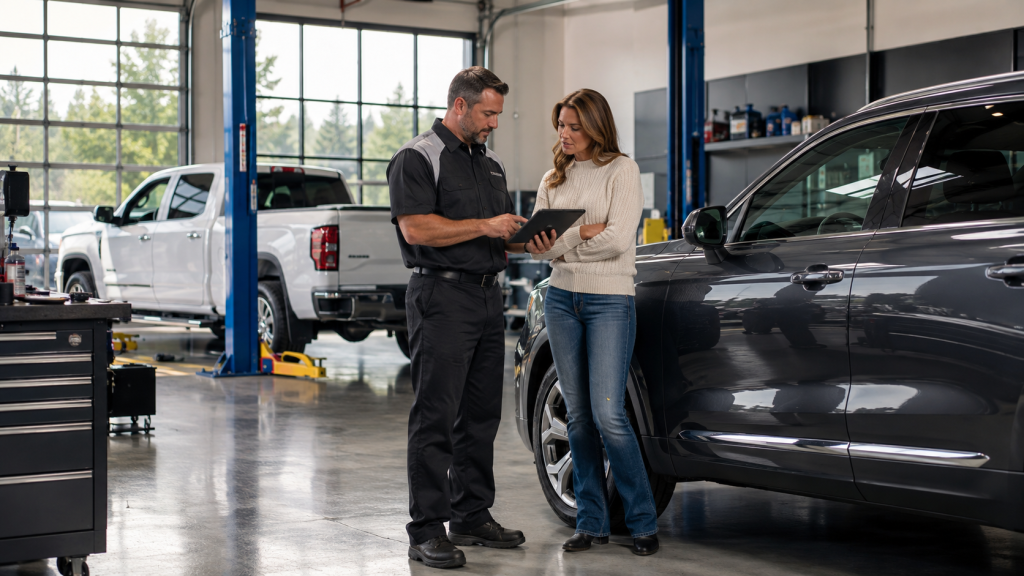
The advisor acts as the bridge between the customer and the technician. Technicians spend much of the day inside repair bays performing inspections and repairs, while advisors manage scheduling, estimate approvals, repair updates, warranty communication, and delivery coordination.
Strong dealership service communication involves timing as much as information. Customers want updates when major repair stages change, not only when the vehicle is finished. A meaningful update may include completed diagnostics, parts ordering status, additional findings, revised completion timing, or technician recommendations.
Digital communication tools now allow dealerships to send:
• Text updates for estimate approvals
• Video inspections showing repair findings
• Status notifications during repair progression
• Links for service authorization
These tools create clearer visibility into repairs that customers cannot physically observe inside the shop. A brake inspection video showing rotor scoring or fluid leakage communicates repair urgency far more clearly than a vague phone description.
Communication quality also shapes trust during larger repairs. Transmission work, diesel diagnostics, electrical repairs, and suspension failures may require extended inspection periods before technicians finalize repair direction. Regular updates reassure customers that the vehicle is still progressing through active diagnostic stages.
What Customers Should Evaluate During Service Visits
Repair communication is not only about friendliness. It also reflects workflow organization, technical clarity, and operational transparency. Customers evaluating a dealership service department should pay attention to how clearly information is explained throughout the visit.
Strong communication usually includes:
• Clear explanations of diagnostic charges before repairs begin
• Realistic timeline discussions instead of rushed promises
• Approval requests before additional repairs are performed
• Documentation showing technician findings and recommendations
• Follow up communication when timelines shift
Drivers should also evaluate whether explanations make sense technically. A strong advisor can explain why a repair is needed, what failed, how the technician confirmed the issue, and whether additional inspections may become necessary.
At Ross Downing GMC Gonzales Service Center, service communication plays a major role in reducing uncertainty during maintenance and repair visits. Whether the vehicle requires diagnostics, factory scheduled maintenance, electrical testing, or complex truck repairs, transparency throughout the process creates clearer expectations and a smoother ownership relationship.


