

Ross Downing GMC of Gonzales

Blog / Gonzales GMC Dealer

In-Depth Guide to Used GMCs: Serving Baton Rouge and Surrounding Areas

At Ross Downing GMC, we understand that purchasing a used vehicle is a significant decision. This guide aims to provide you with essential information about used GMCs, focusing on serving the areas of Gonzales, Baton Rouge, and Denham Springs. Whether you’re a first-time buyer or looking to upgrade your current vehicle, we’re here to help you navigate the process with confidence.

Pre-Owned vs Certified Pre-Owned (CPO)

Understanding the difference between pre-owned and certified pre-owned vehicles is crucial when considering a used GMC.

What is Certified Pre-Owned?

Certified Pre-Owned (CPO) vehicles are late-model used cars that have undergone a rigorous inspection process and meet specific criteria set by the manufacturer. GMC’s CPO program offers several benefits:

  • Comprehensive inspection
  • Extended warranty coverage
  • 24/7 roadside assistance
  • Free vehicle history report

How to Check if a Car is Certified Pre-Owned

To verify if a GMC is certified pre-owned:

  1. Check for the CPO designation in the vehicle listing
  2. Ask for the CPO inspection report
  3. Verify the warranty information
  4. Review the vehicle history report provided

Inventory Options: CPO, Pre-Owned, and Budget

At Ross Downing GMC, we offer a diverse range of used GMCs to suit various needs and budgets:

  1. Certified Pre-Owned: Late-model GMCs with low mileage and manufacturer backing
  2. Pre-Owned: Quality used GMCs that have passed our dealership inspection
  3. Budget-Friendly Options: Older models or higher-mileage vehicles for cost-conscious buyers

Inventory Under $15,000

For those seeking the most affordable options, we proudly offer a selection of used vehicles priced under $15,000. This inventory includes:

  • Older model GMCs with higher mileage but still in good condition
  • A variety of vehicle types, from compact cars to SUVs and trucks
  • Thoroughly inspected vehicles to ensure reliability
  • Great options for first-time buyers, students, or those on a tight budget

To explore our budget-friendly inventory:

  1. Visit our “Inventory Under $15k” page on our website
  2. Use the filters to narrow down your search based on your preferences
  3. Contact our sales team for more information on any vehicle that catches your eye

Remember, these budget-friendly options offer an excellent opportunity to experience GMC quality at a more accessible price point.

Best Ways to Buy a Used Car

Local Dealership Advantage

While online platforms offer convenience, purchasing from a local dealership like Ross Downing GMC provides several benefits:

  • In-person vehicle inspection
  • Test drive opportunities
  • Expert guidance from our sales team
  • On-site financing options
  • Immediate support for any issues

Online Alternatives

Popular online platforms for used car shopping include:

  • Edmunds
  • AutoTrader
  • Kelley Blue Book (KBB)
  • Cars.com
  • CarGurus

However, these platforms often lack the personalized service and local support that a dealership can offer.

How to Buy a Vehicle Online

If you prefer online shopping, Ross Downing GMC offers a user-friendly online showroom experience:

  1. Browse our inventory on our website
  2. Use our online tools:
    • Payment calculator
    • Trade-in value estimator
    • Pre-approval application
  3. Schedule a virtual or in-person test drive
  4. Complete the purchase process online or in-store

What to Know When Buying a Used GMC

Budget and Research

  1. Determine your budget, including insurance and maintenance costs
  2. Research GMC models that fit your needs
  3. Check vehicle history reports

When considering a used GMC, many buyers ask, “Is GMC a good secondhand car?” The answer is a resounding yes. GMCs are known for their durability and reliability, making them excellent choices for secondhand purchases. Their robust build quality and long-lasting performance make them a smart investment for used car buyers.

Finding and Evaluating a Car

  1. Use our online inventory or visit our dealership
  2. Conduct a thorough inspection
  3. Take a test drive
  4. Have a trusted mechanic inspect the vehicle (if not CPO)

A common concern when evaluating used cars is mileage. You might wonder, “How many miles is too much for a used GMC?” While it varies by model, many GMCs can reliably run for 200,000 miles or more with proper maintenance. However, for longer-term use, consider vehicles with less than 100,000 miles. Remember, regular maintenance is key to longevity, regardless of mileage.

Negotiations and Paperwork

  1. Understand the vehicle’s market value
  2. Discuss pricing and any potential add-ons
  3. Review all paperwork carefully before signing

Important Considerations

“As-Is” Sales

Be cautious of “as-is” sales, which offer no warranty. At Ross Downing GMC, we provide clear information about the condition and history of our used GMCs.

Warranties

Understand the warranty coverage:

  • CPO vehicles come with extended warranties
  • Some used vehicles may have remaining factory warranty
  • Consider purchasing an extended warranty for added peace of mind

Financing

We offer competitive financing options:

  • In-house financing
  • Relationships with multiple lenders
  • Special financing programs for various credit situations

Insurance

Factor in insurance costs when budgeting for your used GMC. We can provide estimates to help you plan accordingly.

GMC Reliability and Longevity

When shopping for a used GMC, you might ask, “What year is the GMC the most reliable?” While recent GMC models (2018 and newer) have shown improved reliability, specific reliability can vary by model and year. It’s always wise to research the particular model and year you’re interested in for the most accurate information.

Another common question is, “Do GMC cars last long?” With proper maintenance, GMC vehicles are known to last for many years, often exceeding 200,000 miles. This longevity is a testament to GMC’s build quality and engineering.

Many potential buyers also wonder, “Is GMC a good make of car?” GMC is reputed for producing robust, high-quality vehicles, particularly excelling in trucks and SUVs. Their commitment to durability and performance has earned them a loyal customer base.

While GMC consistently ranks well in reliability studies, it’s important to note that no brand is perfect. When asked, “Is GMC the most reliable car brand?” we encourage buyers to research specific models and years for the most accurate information. GMC’s reliability is generally strong, but individual experiences can vary based on maintenance history and usage.

Serving Gonzales, Baton Rouge, and Denham Springs

Ross Downing GMC proudly serves the communities of Gonzales, Baton Rouge, and Denham Springs, offering a wide selection of used GMCs to meet the diverse needs of our customers in these areas.

Whether you’re looking for used cars in Gonzales, searching for used trucks for sale in Baton Rouge, LA, or seeking quality pre-owned vehicles in Denham Springs, our extensive inventory and knowledgeable staff are here to assist you. We understand the unique needs of drivers in our area and are committed to helping you find the perfect used GMC that fits your lifestyle and budget.

Visit our dealership or browse our online showroom to start your journey towards owning a quality used GMC today. Our team is ready to answer any questions and guide you through the process of finding and purchasing your ideal vehicle.
Posted in:

Related Posts

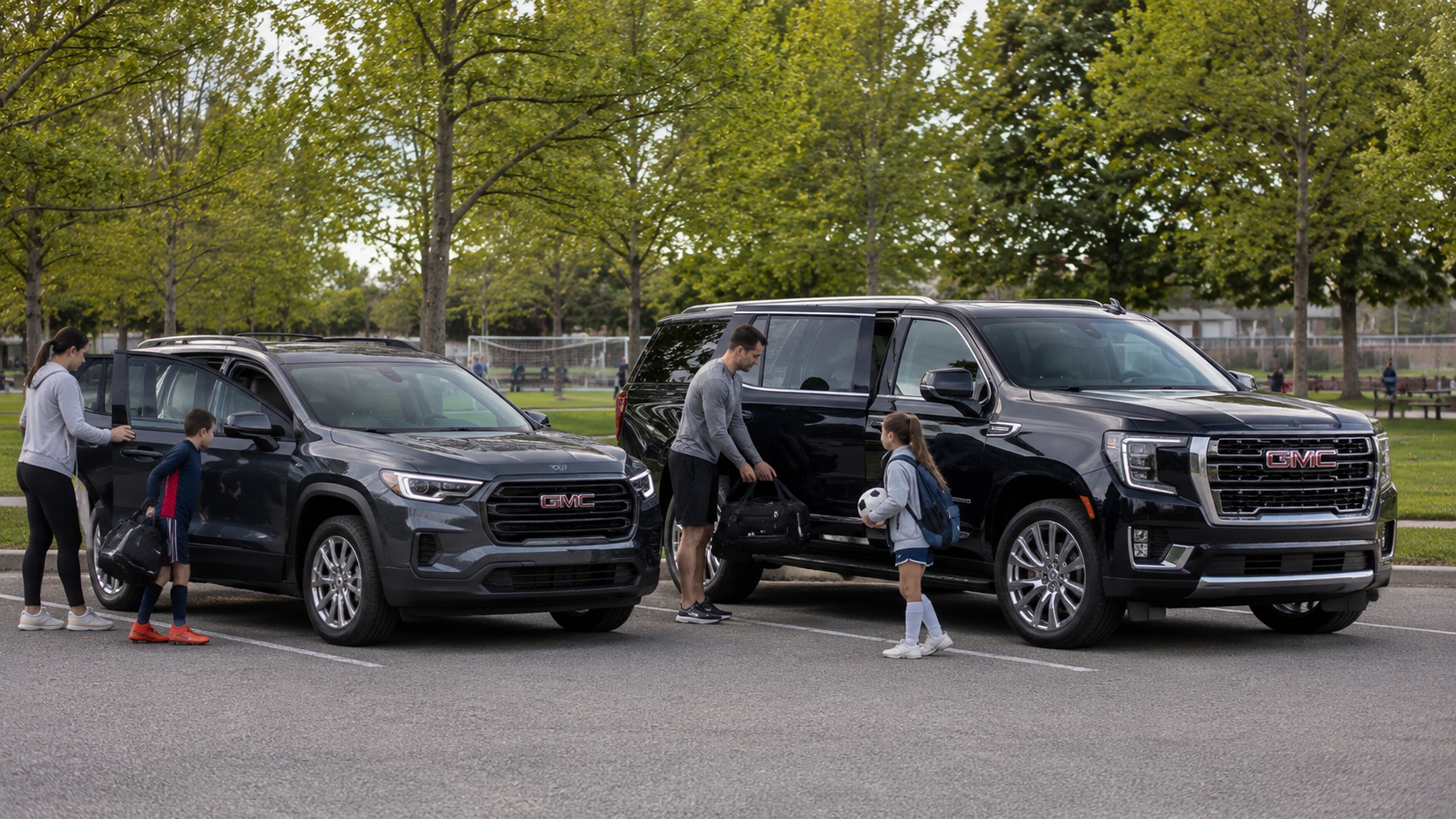
GMC Acadia vs Yukon for Growing Gonzales Families

The GMC Acadia vs Yukon decision starts with how often your family fills the third row and cargo area. Acadia uses a midsize three row layout. Yukon uses a larger full size structure. Both can seat up to eight people. However, those seats do not provide the same space or travel role. A clear choice starts with who rides in each row. It also starts with what must fit behind them. Trailer plans, garage size, and daily parking should enter the review as well. Why Seating Capacity Does Not Settle the Choice Both GMC SUVs can offer seating for up to eight. Still, equal seat counts do not create equal cabin space. Acadia gives families three rows in a smaller body. Yukon adds more room for people, gear, and mechanical hardware. The question is not only how many people fit. Instead, ask who will sit in the third row. Young children may need less legroom than adults. Older children may also need easier entry during school or sports travel. more Seat width matters when several child seats stay installed. Door openings and second row movement matter too. Therefore, families should test their own seats before making a choice. Acadia may cover a household that uses row three several times each week. Yukon may suit homes with frequent adult riders or larger teens. Even so, passenger count alone should not control the purchase. How Third Row Use Changes the Decision The third row should be judged by time, access, and passenger size. A short ride across Gonzales creates one need. A long interstate trip creates another. Acadia can provide flexible seating without full size exterior dimensions. That can work well for children, friends, or occasional guests. However, frequent adult use may point toward Yukon. Families should test several details during the visit: Install each child seat in its likely position. Then check access to row three. Move the second row forward. Confirm that passengers can enter without strain. Sit in every occupied row for several minutes. Check knee, foot, and head room. Confirm that climate vents and charging ports reach each regular passenger. Furthermore, seat placement can change daily routines. A child seat may block the easiest path into row three. Folded second row sections may also reduce seating choices. For this reason, the strongest choice comes from a full cabin test. Bring the people who ride most. Then repeat the entry process several times. Cargo Behind Passengers Creates a Clear Divide Maximum cargo numbers require folded seats. Therefore, they do not describe a family trip with every needed row raised. Current Acadia data lists 23 cubic feet behind row three. Current Yukon data lists 25.5 cubic feet in the same area. That difference may sound small. Yet the shape of the floor and side walls can change what fits. A stroller, cooler, sports bag, and grocery load can fill the space quickly. Large suitcases can also block rear visibility. Therefore, families should test their own gear before relying on one published number. Acadia reaches 97.5 cubic feet with rear rows folded. Yukon reaches 122.8 cubic feet. Those figures matter when fewer passengers travel. They matter less when all three rows stay occupied. Yukon XL may enter the review when full passenger loads also bring heavy luggage. Its longer rear body adds more space behind row three. Still, that extra length asks for more garage depth and parking room. When Towing Pushes a Family Toward Yukon Acadia can tow up to 5,000 pounds when properly equipped. Yukon can reach up to 8,400 pounds with the proper configuration. Those ceilings create a strong dividing point. However, the trailer label is only the starting number. Loaded trailer weight must include water, food, gear, fuel, and installed equipment. Tongue weight also presses down on the SUV. Passengers, cargo, accessories, and tongue weight share the payload limit. Therefore, a full family cabin can reduce the remaining trailer allowance. Acadia may fit smaller campers, utility trailers, or light recreational loads. Yukon may fit heavier campers, boats, or frequent trailer travel. The exact answer still comes from the chosen engine, drivetrain, hitch equipment, and payload label. Yukon also offers V8 and diesel engine choices. Acadia uses a 2.5L turbo engine. As a result, Yukon gives families more powertrain paths for heavier work. Before towing, compare the exact SUV with the loaded trailer. Do not rely on the largest published number alone. When Acadia Is Easier to Live With More room is not always the smarter daily choice. Acadia gives families three rows in a smaller exterior package. Therefore, it may fit school lines, shopping lots, and home garages with less effort. A smaller body can also make routine errands simpler. Tight turns, narrow spaces, and crowded parking areas may require fewer corrections. In addition, Acadia can carry three rows without the full size footprint of Yukon. Families should measure the garage before visiting. Include shelving, steps, stored items, and liftgate clearance. Also consider the space needed to open rear doors beside another car. Acadia may cover most family needs when row three carries children or occasional guests. It may also cover moderate trailer plans within the exact rating. Yukon earns its larger footprint when the family uses that room each week. Otherwise, Acadia may provide enough seats and cargo space for normal weeks. Which Family Routines Justify Yukon Yukon makes the strongest case when several demanding needs occur every week. Frequent adult third row use is one sign. Heavy trailer plans are another. Before choosing, review these repeated routines: Adults or larger teens use the third row during long trips. The family carries many passengers and bulky gear at the same time. A camper, boat, or trailer approaches Acadia limits after loading. V8 or diesel engine choice matters for regular trailer travel. The home garage and normal parking areas can handle Yukon dimensions. Acadia remains a strong fit when three rows matter but full size space does not. It can serve school travel, family errands, and lighter towing within the exact rating. Ross Downing GMC Gonzales can place both SUVs side by side for a clearer review. Bring child seats, travel gear, and trailer details to that visit. Therefore, the comparison reflects your normal family routine. The right answer becomes clearer when space, cargo, towing, and parking are reviewed together. Acadia covers many growing families well. Yukon fits families whose repeated loads require more room and stronger trailer support.

What Is MSRP for GMC Shoppers in Gonzales Louisiana

What is MSRP when buying a new GMC in Gonzales, Louisiana? MSRP means Manufacturer’s Suggested Retail Price, which is the vehicle price recommended by GMC. The number gives shoppers a starting point for comparing models, trims, and factory equipment. However, it is not the same as the final amount due at purchase. A new GMC can show several prices during the shopping process. Each number serves a separate purpose. Therefore, clear comparisons require more than one figure. What MSRP Means on a New GMC MSRP begins with the manufacturer, not the dealership. GMC assigns a suggested retail price to each model, trim, and factory configuration. The word suggested matters because the dealership can set the selling price. MSRP appears on the new vehicle window label. That label identifies the exact truck or SUV and lists its factory equipment. In addition, it shows the price attached to each factory option or package. more What does MSRP stand for in a dealership conversation? It stands for Manufacturer’s Suggested Retail Price. Therefore, it gives everyone the same starting reference for that exact vehicle. Still, MSRP does not settle the full transaction. Dealer pricing, incentives, trade credit, taxes, registration, and financing enter later. For this reason, shoppers should treat MSRP as the first number in a longer pricing review. What Appears on the Window Sticker A base MSRP usually reflects the starting price for a specific model and trim. However, the exact vehicle may include added factory equipment. Those choices raise the total shown on its window label. A GMC Sierra may include a different engine, drivetrain, wheel package, or trailering package. A GMC Yukon may include different seating, technology, or appearance packages. Therefore, two vehicles with the same trim name can show different sticker totals. The window label can include these pricing lines: The base price for the model and trim starts the calculation. Factory options and packages add their listed amounts. The destination charge covers delivery from the manufacturer. The total vehicle price combines the listed factory pricing lines. Destination deserves close review because websites can display pricing in different ways. One page may lead with base MSRP. Another may show a total that already includes destination. Therefore, compare the same line on both vehicles. Dealer installed accessories may appear outside the factory window label. Ask whether the vehicle includes tint, steps, protection products, or other added items. Then request the price for each item in writing. Why Dealer Pricing Can Differ From MSRP Can a dealership sell a GMC below MSRP? Yes. Dealer discounts or manufacturer incentives may lower the advertised selling price. Inventory levels, model demand, and promotional periods can also shape the listed amount. A vehicle can also appear above MSRP. A market adjustment or dealer installed item may raise the price. Therefore, ask what created the difference before comparing offers. Several prices may appear beside one GMC listing. The page may show MSRP, a dealer discount, an incentive amount, and a final advertised price. Each line needs its own explanation. In addition, some incentives require specific qualifications. A program may apply only to current owners, military members, recent graduates, or certain financing choices. Eligibility rules and expiration dates can change the amount available. The strongest comparison uses the same equipment and the same qualification rules. Otherwise, one offer may appear lower because it includes an incentive unavailable to another shopper. How Incentives and Trade Credit Enter the Deal Does a rebate change the original MSRP? No. The manufacturer’s sticker remains the same. Instead, the rebate lowers the transaction amount for an eligible shopper. Dealer discounts work differently from manufacturer incentives. The dealership provides one reduction, while the manufacturer supports the other. Therefore, the purchase worksheet should identify each amount separately. Trade credit belongs on its own line as well. The dealership assigns a figure to the current vehicle. That credit reduces the remaining balance, but it does not change the new GMC’s MSRP. Keeping these figures separate makes the offer easier to review. First, confirm the selling price before trade credit. Next, review the trade amount. Then examine taxes, fees, and financing. A shopper with negative trade equity may carry an unpaid balance into the new loan. By contrast, positive equity may reduce the amount financed. Therefore, the trade can change the loan without changing the new vehicle’s sticker. Why Monthly Payment Is Not the Final Price A monthly payment does not show the complete cost of a GMC. The payment comes from the amount financed, interest rate, loan term, and payment schedule. Down payment and trade equity also change the financed balance. A longer loan term can reduce the monthly amount. However, it can also increase total interest paid. Therefore, compare the annual percentage rate, term length, amount financed, and total of payments. Optional products can also enter the loan. These may include service contracts, protection plans, or other selected items. Ask whether each product is optional and review its separate price. Why can a higher priced GMC show a lower monthly payment? It may carry a lower rate, larger down payment, longer term, or stronger incentive. Therefore, payment alone cannot identify the lower cost offer. Before signing, review every figure on the finance contract. Confirm the selling price, trade credit, cash down, amount financed, annual percentage rate, term, and total payments. Which Number Gonzales Shoppers Should Compare The out the door price gives Gonzales shoppers the clearest total for comparing offers. It includes the agreed selling price plus taxes, registration, and listed dealership charges. It also reflects approved discounts and incentives. Request the total in writing for the exact GMC under review. Then confirm that each quote uses the same equipment, incentive qualifications, and trade assumptions. A complete comparison should show: The exact vehicle identification number connects the quote to one GMC. The MSRP and selling price appear as separate figures. Each discount and incentive appears on its own line. Taxes, registration, documentation, and added items appear clearly. Trade credit and financing terms remain separate from the vehicle price. Ross Downing GMC Gonzales can answer local pricing and financing questions for shoppers near Gonzales, Baton Rouge, and Prairieville. Bring the written quote, window label, and trade details into the conversation. MSRP gives shoppers a useful starting point, but it is only one part of the purchase. Therefore, compare the sticker, selling price, credits, fees, and financing separately. That process creates a clearer view of the final GMC cost.

GMC Yukon AT4 vs Denali: Which Trim Is Right for You?

The GMC Yukon AT4 vs Denali decision starts with a single question: what do you use your Yukon for most? Both trims sit at the top of the Yukon lineup. Both carry the same full-size platform, the same three-row cabin, and the same core technology suite. The divergence is in how each trim is engineered to perform — one for terrain, one for road composure and interior refinement. Two Different Design Philosophies The AT4 and the Denali share a body. They do not share a suspension calibration, a tire specification, a drivetrain default, or an interior priority. GMC engineers those two trims from different starting points. The AT4 begins with a terrain-capable foundation and layers interior content on top. The Denali begins with road composure and interior refinement and layers available off-road capability underneath. more That difference shows up on the highway before it ever shows up on a trail. The AT4's suspension is calibrated for terrain response — firmer damping that absorbs trail impacts but transmits more road texture to the cabin at highway speed. The Denali uses Magnetic Ride Control, a system that adjusts damper firmness thousands of times per second based on road conditions. On smooth pavement, the Denali is noticeably more composed. On broken pavement or gravel, the AT4 absorbs irregularities more predictably. Neither trim is unusable in the other's environment. Each one is optimized for a specific priority. Powertrain: Where They Diverge First The AT4 comes standard with the 5.3L V8, producing 355 horsepower and 383 lb-ft of torque. The Denali comes standard with the 6.2L V8, producing 420 horsepower and 460 lb-ft of torque. That 65-horsepower gap is the first mechanical difference between the two trims and the one with the most direct effect on daily driving. At highway speeds, the 6.2L pulls more confidently under load. When the Denali merges onto a highway towing a trailer near its rated capacity, the larger engine maintains momentum without the transmission hunting for a lower gear. The 5.3L in the AT4 is a capable engine. It handles the same towing loads when properly configured. At full trailer weight, it works harder to maintain speed on grades and requires more throttle input in passing situations. Both trims offer the 3.0L turbo diesel I-6 as an alternative for buyers who prioritize range and fuel efficiency over peak output. AT4 Off-Road Hardware Explained The AT4's off-road advantage comes from four hardware components that the Denali does not include: skid plates, all-terrain tires, Active Response 4WD as the standard drivetrain, and optional air ride adaptive suspension. The skid plate package protects three specific underbody areas — the transfer case, the front differential, and the fuel tank. Those are the components most exposed during low-clearance trail travel, creek crossings, and rock contact. On pavement, skid plates add weight without benefit. On technical terrain, they are the difference between a recoverable situation and component damage. The AT4 rides on all-terrain tires from the factory. That specification gives the tire a more aggressive sidewall and tread pattern than the highway-oriented tires on the Denali. The grip difference on loose gravel, wet grass, or dirt roads is measurable without any additional hardware. Active Response 4WD is standard on the AT4, meaning 4WD engagement is the default configuration rather than an add-on. The available air ride adaptive suspension raises ground clearance by up to two inches over the AT4's already elevated stance. For buyers who travel unpaved roads regularly or take the vehicle into light technical terrain, that additional clearance changes the approach and departure angles in ways that matter. For buyers who rarely leave pavement, the base AT4 suspension handles the load without the air system. Denali Interior and Technology The Denali delivers two things the AT4 does not come standard with: the 6.2L V8 and Magnetic Ride Control. Beyond those two mechanical advantages, the Denali separates from the AT4 through interior specification. The Denali comes standard with open-pore Paldao wood trim, genuine leather seating surfaces, a 16.8-inch diagonal infotainment screen, and a 15-inch head-up display. The AT4 includes a 16.8-inch screen as well, but uses different interior materials oriented toward durability rather than refinement. The Denali's cabin is quieter at highway speed, partly because of the Magnetic Ride Control's effect on body motion and partly because of additional sound insulation in the door panels and headliner. Super Cruise hands-free driver assistance is available on the standard Denali as an option. It is not included in the base Denali price. On the Denali Ultimate, Super Cruise is standard equipment. On the AT4, Super Cruise is available as an option at the AT4 Ultimate level. Buyers comparing standard trim pricing should not assume Super Cruise is included in either case. The Denali Ultimate Upgrade Path The Denali Ultimate takes the standard Denali further in three specific directions. Air suspension becomes standard at the Denali Ultimate level, replacing the Magnetic Ride Control setup and giving the driver adjustable ride height at the press of a button. Wheel size increases to 24 inches. The interior adds massaging front seats, an 18-speaker Bose Performance Series audio system, and dual 12.6-inch rear seat entertainment displays. Super Cruise moves from available to standard. For buyers who want the most complete version of the Denali, the Ultimate package represents a single upgrade decision rather than a list of individual options to select. Towing: Which Trim Fits the Job Both the AT4 and the Denali reach a maximum towing capacity of 8,200 pounds when equipped with the Max Trailering package. That package is not included in the base price of either trim. It adds an integrated trailer brake controller, a hitch guidance camera system, a trailering app with sway control, and the necessary cooling upgrades to sustain towing at high load. Without the Max Trailering package, the towing ceiling on both trims is lower. Buyers who plan to tow consistently should confirm Max Trailering is on the build sheet before comparing total prices. The Denali has a towing confidence advantage that does not appear on the spec sheet. The standard 6.2L V8 provides more reserve torque at highway towing speeds than the AT4's standard 5.3L. Towing at 7,000 pounds on a flat highway, both trims handle the load. Towing that same weight up a long grade in summer heat, the 6.2L maintains speed more naturally while the 5.3L runs closer to its threshold. For buyers who tow heavy loads regularly on varied terrain, that reserve matters over the course of a long haul. Which Buyer Each Trim Is Built For The AT4 is built for buyers who want a full-size SUV that can handle unpaved roads, light trails, or terrain that changes without notice. The skid plates, all-terrain tires, and 4WD-default drivetrain remove the hesitation that comes with taking a highway-tuned SUV off pavement. The AT4 is also the right choice for buyers who want a capable tow vehicle that does not prioritize interior refinement above function. At $78,595, it enters the premium Yukon tier at the lowest price point of the two trims. The Denali is built for buyers who want the Yukon's most refined version of every daily drive. The 6.2L standard engine, Magnetic Ride Control, premium interior materials, and the clear path to the Denali Ultimate package make it the stronger choice for buyers who prioritize long-distance comfort, interior quality, and the option to add Super Cruise and air suspension without moving to a different model. At $82,595, the $4,000 premium over the AT4 buys a different powertrain and a fundamentally different interior specification. For buyers who want off-road hardware and maximum interior content in one vehicle, the AT4 Ultimate at $98,395 and the Denali Ultimate at $104,395 represent the highest-specification versions of each philosophy, with the towing, audio, and technology packages available in both.