



Choosing between the GMC Canyon and Sierra 1500 is not about which truck is better. It is about scale, platform strength, and how often you truly use full-size capability. Both are engineered for real work. The difference is how much truck you need every day.
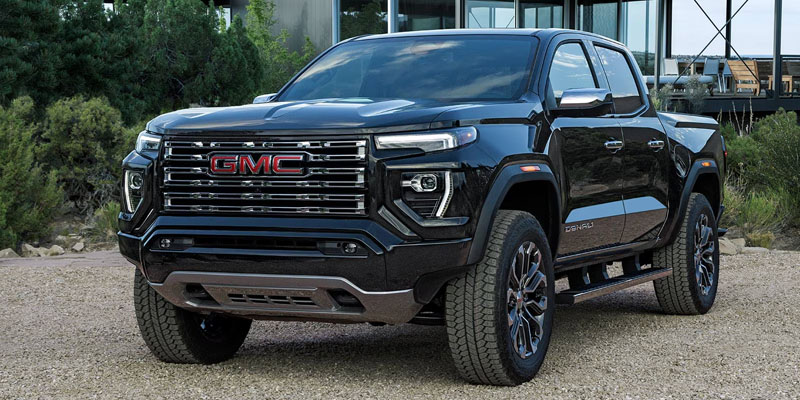
This comparison focuses on frame architecture, engine output, towing ratings, payload capacity, and daily usability so you can match the truck to your actual workload.
Platform and Frame Differences
The Canyon is a midsize truck built on a smaller frame architecture. It offers a narrower body, shorter overall length, and lighter curb weight. That translates to easier maneuverability and lower overall operating mass.
The Sierra 1500 is a full-size truck built on a larger, stronger frame. It provides wider track width, longer wheelbase options, and greater structural capacity for towing and hauling heavier loads.
Key structural differences:
- Canyon is optimized for moderate towing and daily flexibility.
- Sierra 1500 is engineered for higher gross vehicle weight ratings and larger trailer loads.
- Sierra offers more cab and bed configurations to support work-focused builds.
If you regularly tow heavier trailers or carry construction materials, frame size matters. If most of your driving is commuting with occasional weekend utility use, midsize efficiency can be an advantage.
Engine Lineup Comparison
GMC Canyon Powertrain
The current Canyon is powered by a 2.7L Turbo engine tuned for strong torque delivery. This engine is engineered to provide diesel-like torque characteristics in a gasoline platform.
- High torque output at low RPM
- Designed for trailering and off-road use
- Paired with an 8-speed automatic transmission
This turbocharged four-cylinder produces torque figures competitive with some older V8 platforms while maintaining a more compact engine footprint.
GMC Sierra 1500 Powertrains
The Sierra 1500 offers multiple engine options:
- 2.7L TurboMax
- 5.3L V8
- 6.2L V8
- 3.0L Duramax Turbo Diesel
The 2.7L TurboMax provides strong torque and improved fuel efficiency relative to V8 engines. The 5.3L and 6.2L V8 engines deliver higher horsepower for heavy towing and acceleration under load. The 3.0L Duramax diesel provides exceptional torque and improved highway efficiency for long-distance hauling.
If maximum output flexibility matters, the Sierra provides more powertrain choices.
Towing Capacity Comparison
This is often the deciding factor.
GMC Canyon:
- Maximum towing capacity approximately 7,700 pounds when properly equipped.
GMC Sierra 1500:
- Towing capacity ranges significantly depending on configuration.
- Properly equipped Sierra 1500 models can exceed 13,000 pounds.
That difference is substantial.
If you tow:
- A small utility trailer
- A mid-size boat
- A compact camper
the Canyon may be fully capable.
If you tow:
- Large travel trailers
- Equipment trailers
- Heavy work loads regularly
the Sierra 1500’s higher rating provides necessary margin and stability.
Towing is not only about weight rating. Wheelbase length and frame mass contribute to stability under load. The Sierra’s larger footprint offers greater confidence for heavier trailers.
Payload Differences
Payload capacity reflects how much weight can be carried in the bed and cabin combined.
Canyon:
- Designed for moderate payload needs.
- Ideal for landscaping materials, recreational gear, and light jobsite equipment.
Sierra 1500:
- Higher maximum payload depending on configuration.
- More suitable for construction materials, heavy cargo, and contractor tools.
If your truck regularly carries dense material such as gravel or construction supplies, payload capacity matters as much as towing.
Cab and Bed Configurations
Canyon typically offers:
- Crew Cab configuration
- Standard bed length
Sierra 1500 offers:
- Regular Cab, Double Cab, and Crew Cab
- Multiple bed lengths including short, standard, and long bed options
The Sierra’s flexibility allows it to be configured as a dedicated work truck or a family-ready truck with maximum interior space.
Interior room is another distinction. The Sierra provides more rear-seat legroom and wider cabin space for passengers.
Daily Driving and Maneuverability
Where the Canyon has an advantage is size management.
- Easier to park in tighter urban spaces
- Narrower body width improves maneuverability
- Lighter weight improves agility in city driving
For drivers who commute daily, navigate downtown traffic, or park in residential garages, the Canyon’s smaller footprint reduces fatigue.
The Sierra remains manageable but requires more space awareness, particularly in tighter parking lots.
Fuel Economy Considerations
Fuel economy varies by engine and drivetrain.
In general:
- The Canyon’s smaller size supports improved efficiency relative to V8 Sierra configurations.
- Sierra models equipped with the 2.7L TurboMax or 3.0L diesel offer competitive highway efficiency for a full-size truck.
Fuel economy differences narrow when comparing turbocharged engines across both trucks. Larger V8 configurations increase fuel consumption, particularly under load.
Suspension and Ride Character
Canyon:
- Tuned for balance between utility and daily comfort.
- More compact suspension geometry.
Sierra 1500:
- Broader suspension tuning range.
- Available adaptive systems and enhanced trailering suspension setups.
Full-size trucks generally offer more ride isolation over rough surfaces due to longer wheelbase and heavier mass.
If ride smoothness under load is critical, the Sierra’s larger platform provides an advantage.
Trailering Technology and Driver Assistance
Both trucks offer advanced trailering systems, but the Sierra 1500 includes expanded camera systems and available trailering technology packages suited for larger trailers.
Features may include:
- Trailer brake controllers
- Multi-camera towing views
- Hitch guidance systems
Technology support scales with intended use. The Sierra’s systems are designed for heavier-duty scenarios.
Which Truck Fits Your Needs?
Choose the Canyon if:
- You want a truck that fits daily driving comfortably
- Your towing needs stay under midsize limits
- Maneuverability and efficiency matter
- You want strong torque in a smaller footprint
Choose the Sierra 1500 if:
- You regularly tow heavy trailers
- You need higher payload capacity
- You want multiple engine choices
- Maximum interior space matters
The decision is not about brand hierarchy. Both trucks are engineered with purpose. The key is aligning truck size with real-world demand.
Understanding how often you use maximum capability versus everyday practicality will guide the right choice.


