
Ross Downing GMC of Gonzales

Blog / Gonzales GMC Dealer

GMC Sierra HD Towing Guide: 2500 vs 3500 for Work, Trailering and Heavy Loads

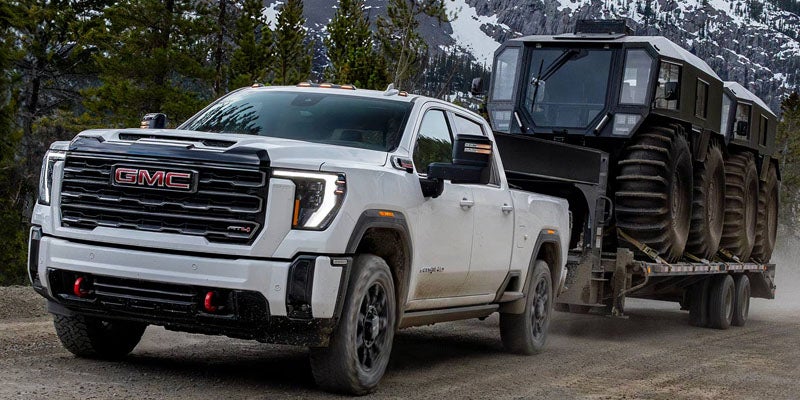
A white GMC Sierra HD pickup truck tows a large off road vehicle on a flatbed trailer through a mountainous area.

Choosing between the GMC Sierra 2500 HD and Sierra 3500 HD is less about maximum advertised tow ratings and more about how the truck manages weight, stability, and durability in real working conditions. Both trucks are engineered for serious trailering, but they are built for different levels of sustained load, payload demands, and long term use. Understanding how these systems differ helps buyers select the right HD truck for the work they actually do, not just the number on a spec sheet.

Platform and Structural Differences

At a foundational level, the Sierra 2500 HD and 3500 HD share a heavy duty frame architecture, but they are tuned differently for load management. The Sierra 2500 HD is designed to balance towing capability with daily usability. It handles substantial loads while maintaining a more compliant unloaded ride.

The Sierra 3500 HD is engineered for continuous heavy hauling. Suspension components, rear axle ratings, and spring capacity are configured to support higher payload demands without compromising control. This distinction becomes critical when towing trailers that place significant weight directly on the truck, such as fifth wheel or gooseneck setups.

In practical terms:

  • The 2500 HD is often limited by payload before it reaches its maximum tow rating
  • The 3500 HD is built to carry more weight on the truck itself while towing

Payload vs Towing Capacity

One of the most misunderstood aspects of HD truck shopping is the difference between towing capacity and payload. Towing capacity reflects how much weight the truck can pull. Payload reflects how much weight the truck can carry including passengers, cargo, hitch equipment, and trailer tongue or pin weight.

Fifth wheel and gooseneck trailers place a significant portion of their weight directly into the bed of the truck. This weight counts against payload, not towing capacity. In many real world scenarios, a Sierra 2500 HD reaches its payload limit before reaching its advertised tow rating.

The Sierra 3500 HD is designed specifically to address this limitation. Higher payload ratings allow it to handle heavier pin weights without exceeding axle or suspension limits.

Key takeaway:

  • If your trailer places heavy weight on the truck, payload matters more than tow rating
  • The 3500 HD offers a larger margin of safety for high pin weight applications

Engine and Transmission Considerations

Both Sierra HD trucks offer powerful engine options designed for sustained towing. Gas engines provide strong capability for moderate and occasional heavy towing. The available Duramax diesel paired with the Allison transmission delivers consistent torque, improved control under load, and enhanced durability for frequent trailering.

Torque delivery is especially important when towing at highway speeds or on grades. Diesel configurations provide strong low rpm pulling power, reducing strain on the drivetrain during long hauls.

While engine output may be similar between the 2500 HD and 3500 HD, the difference lies in how the truck supports that power:

  • The 2500 HD uses the power effectively but is limited by chassis ratings
  • The 3500 HD is built to apply that power continuously under heavier loads

Rear Axle and Stability Differences

Stability under load is one of the defining advantages of the Sierra 3500 HD. Higher rear axle ratings and available dual rear wheel configurations significantly improve control when towing large trailers.

Dual rear wheels increase the contact patch with the road, reducing sway and improving lateral stability. This is particularly valuable for tall trailers, livestock hauling, or commercial equipment transport where side to side movement can be a concern.

The Sierra 2500 HD, while very capable, is better suited for bumper pull trailers, lighter fifth wheels, and situations where maximum stability is not the primary concern.

Real World Towing Scenarios

For many buyers, the decision comes down to how often and how hard the truck will be worked.

The Sierra 2500 HD is well suited for:

  • Equipment trailers used intermittently
  • Recreational towing such as campers or boats
  • Owners who need HD capability but still drive daily
  • Situations where ride comfort unloaded is important

The Sierra 3500 HD is better aligned with:

  • Frequent or commercial towing
  • Large fifth wheel or gooseneck trailers
  • Heavy payload demands in the truck bed
  • Buyers planning for future increases in trailer size or weight

Choosing the heavier truck often provides flexibility and peace of mind as work demands grow.

Ride Quality and Daily Use Tradeoffs

One consideration buyers often overlook is unloaded ride quality. The Sierra 2500 HD generally feels more composed when not carrying weight, making it a better choice for mixed use driving.

The Sierra 3500 HD, particularly in higher capacity configurations, is tuned for load first. When driven unloaded, the ride can feel firmer due to heavier springs and suspension components. This is not a flaw but a result of the truck being optimized for weight management.

Understanding this tradeoff helps buyers avoid selecting a truck that feels excessive for their everyday use.

Long Term Durability and Ownership Expectations

Heavy duty trucks are designed for longevity, but operating within design limits is critical. Regularly running near maximum payload or towing limits accelerates wear on suspension, brakes, and driveline components.

The Sierra 3500 HD provides additional margin for owners who tow heavy loads regularly, reducing stress on components over time. This can contribute to longer service life and more consistent performance under demanding conditions.

Buyers who plan to keep their truck for many years often benefit from choosing a configuration that exceeds current needs rather than just meets them.

Final Perspective

The choice between the GMC Sierra 2500 HD and 3500 HD is not about which truck is stronger on paper. It is about matching the truck’s structural capacity, payload rating, and stability systems to how it will be used day after day.

The Sierra 2500 HD delivers impressive towing capability for owners who balance work and daily driving. The Sierra 3500 HD is built for sustained heavy hauling, higher payload demands, and maximum control under load.

Understanding payload limits, trailer weight distribution, and long term usage patterns is the key to selecting the right HD truck for work, trailering, and heavy loads.
Posted in:

Related Posts

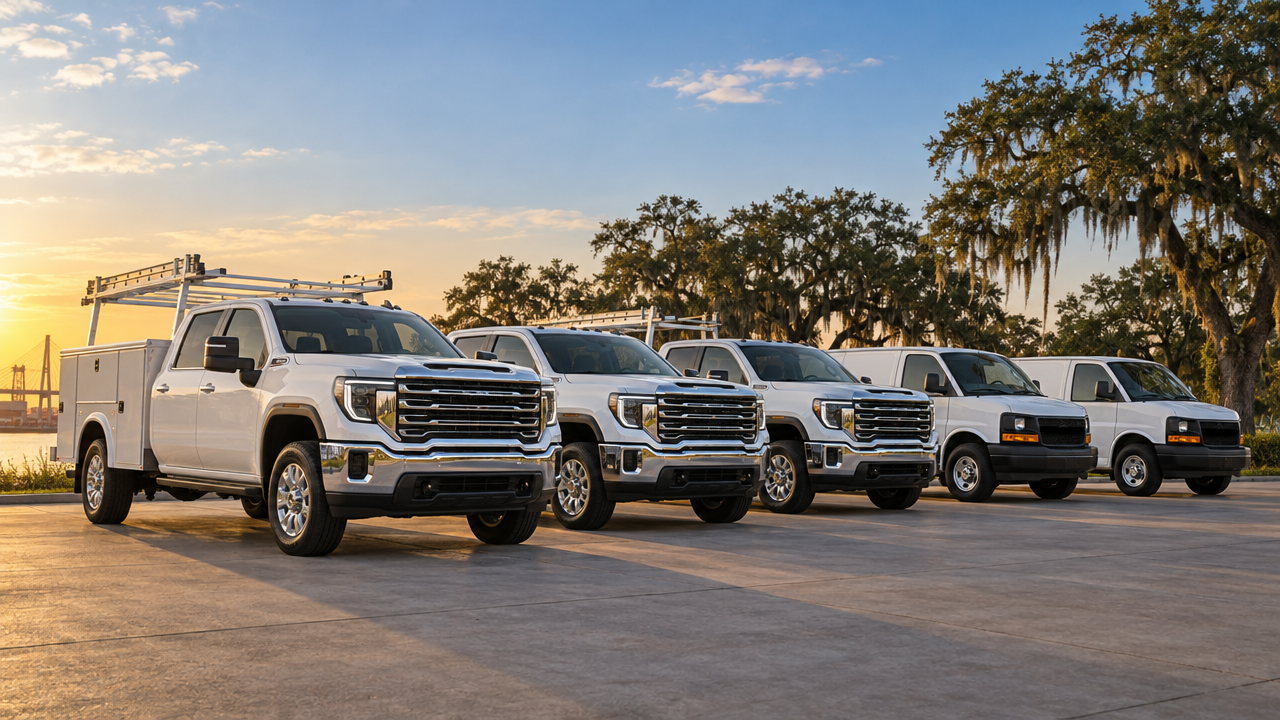
Fleet of GMC work vehicles

5 Questions to Ask Before You Lease a Work Truck

5 Questions to Ask Before You Lease a Work Truck Leasing can make sense if you want newer trucks on a regular cycle, but it isn't the right fit for every truck. If your trucks rack up high miles, get upfits, or stay in your fleet for years, buying usually makes more sense. Ask these five questions before you sign. 1. How many miles will this truck really drive? Leases set a mileage limit, and miles over it usually cost extra at turn-in. Estimate your annual miles honestly, including trips between job sites across Ascension Parish and beyond. 2. What equipment will go on it? Racks, toolboxes and other upfits can lead to charges when a leased truck is returned. If a truck needs heavy upfitting, buying may be simpler. 3. How hard will it be worked? Leases have wear-and-tear standards. A truck that hauls, tows and works every day may show more wear than a lease allows. 4. How long do you want to keep it? If you like replacing trucks on a regular cycle, leasing can fit. If you run trucks until they're worn out, buying usually fits better. 5. What does your accountant say? Leasing and buying can be treated differently for taxes. Talk with your accountant before you decide. Frequently asked questions Is leasing or buying better for a growing business? It depends on how each truck will be used. Many growing businesses lease some trucks and buy the ones that work the hardest. Do leases have mileage limits? Yes. Leases set a mileage limit, and going over it usually means an extra charge when the truck is turned in. Can I buy a truck at the end of a lease? Many leases include an option to buy the vehicle at the end. Ask about the terms of a specific lease before you sign. Trucks for your business? Ross Downing GMC · 2522 S. Burnside Ave., Gonzales, LA 70737 Talk to Our Team Or call (225) 621-2164 This article is general information, not tax, legal or financial advice. Lease and finance terms are subject to approval and vary by vehicle and program. Talk with your accountant about the tax impact for your business.

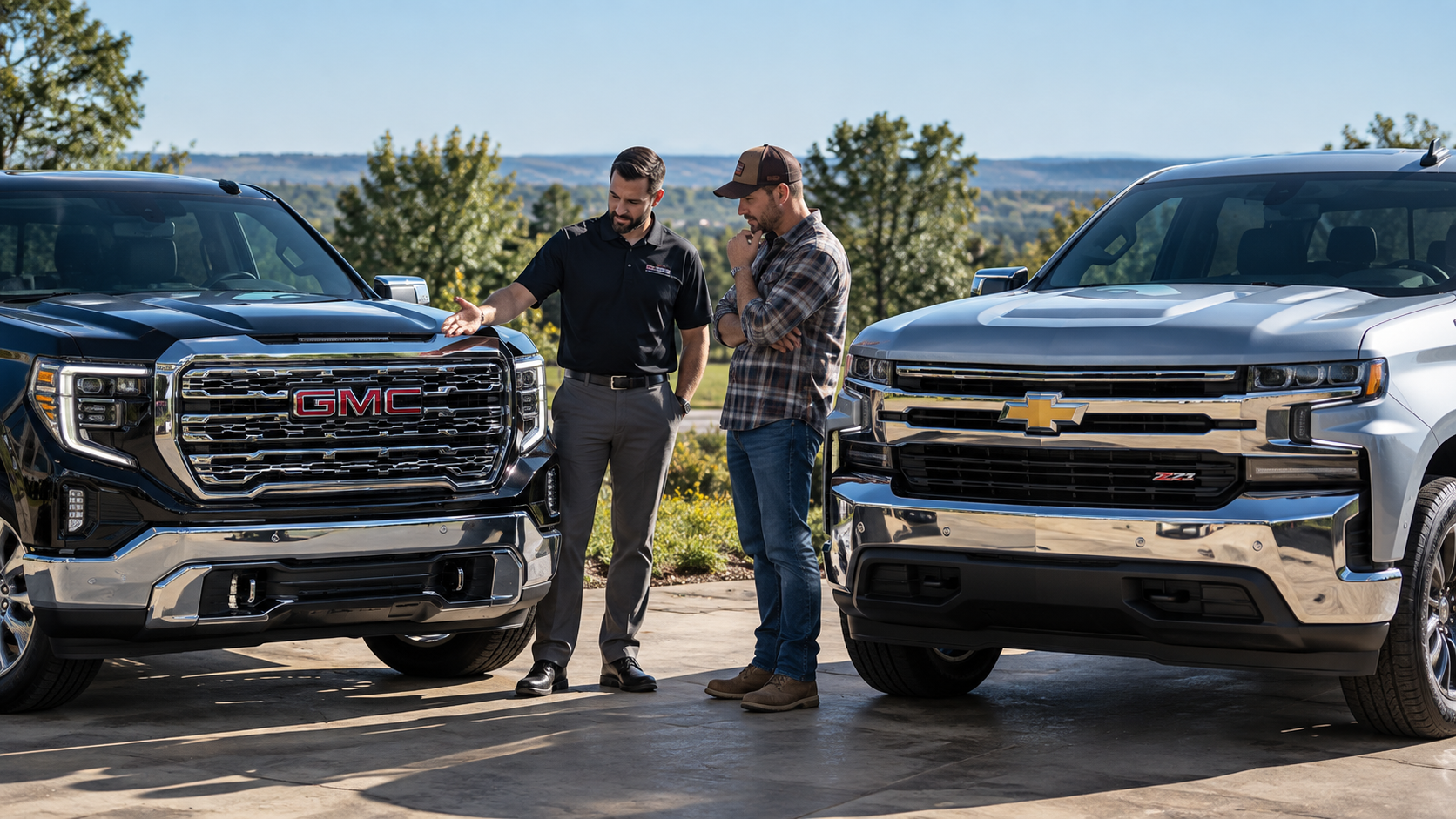
GMC Sierra vs Silverado Comparison for Truck Shoppers

GMC Sierra vs Silverado Comparison for Truck Shoppers

GMC Sierra vs Silverado comparisons start with two trucks that share major GM engineering. However, their trims and equipment take different paths. Both offer strong engine choices, useful trailering hardware, and a wide range of cab and bed setups. However, the details change as you move through each lineup. Therefore, the clearest way to compare them is to look at shared hardware first. Then, compare trims, cabin materials, off road equipment, and cargo features. Start With What the Sierra and Silverado Share The Sierra 1500 and Silverado 1500 share core GM truck engineering. That includes overlapping engine choices and related transmission pairings. So, are they the same truck? No. They start from a similar mechanical base, but each brand packages that hardware differently. In addition, both lineups can offer turbocharged gasoline, V8 gasoline, and Duramax diesel power. Both trucks can be configured for towing, work, commuting, and long highway trips. Moreover, their cab and bed choices overlap in several areas. Before comparing trim names, it helps to confirm the shared pieces: Both trucks can offer a 2.7 liter turbocharged gasoline engine, V8 choices, and a 3.0 liter Duramax diesel. Both lineups include rear wheel drive and four wheel drive configurations across multiple trims. Both trucks offer trailering technology, camera views, and bed focused equipment on selected trims. Still, the trims do not line up perfectly. Therefore, two trucks with the same engine can feel very different inside. Equipment packages, materials, suspension hardware, and exterior details can change the final result. Trim Structure Creates the First Major Difference By contrast, GMC and Chevrolet use different trim ladders. That matters because trim names can make direct comparisons confusing. For this reason, a Sierra Elevation does not have a perfect Silverado twin. Likewise, upper trims can overlap in price while taking different styling and equipment paths. GMC moves from Pro through SLE, Elevation, SLT, AT4, AT4X, Denali, and Denali Ultimate. Chevrolet uses names such as WT, Custom, LT, RST, LTZ, Trail Boss, ZR2, and High Country. What should you compare first? Start with the job you want the truck to handle. Then, compare equipment inside that use case. For GMC shoppers, these trim directions are useful: Pro and SLE focus on straightforward truck equipment with increasing comfort and convenience. Elevation adds a distinct street oriented look with more standard interior and technology content. AT4 and AT4X move toward off road hardware, while Denali trims focus on materials, comfort, and technology. Chevrolet follows a different structure. Therefore, the strongest comparison is not trim name against trim name. It is equipment package against equipment package. Denali and High Country Take Different Approaches Meanwhile, Denali and High Country sit near the top of their lineups. Both add richer cabin materials and more standard features. However, GMC pushes the Denali identity through its own interior finishes, seat configurations, and exterior details. Is Denali simply a different looking High Country? No. The two trims share some GM technology, but their cabin treatments and standard content differ. Sierra Denali uses its own leather treatments and trim details. Denali Ultimate moves further with upgraded front seating and massage functions. In addition, High Country delivers an upscale cabin. However, Chevrolet uses its own materials, trim patterns, and feature packaging. Super Cruise can also appear on selected versions of both trucks. Therefore, it should not be treated as a GMC only feature. The better comparison is to ask what matters inside the cabin. Seat adjustment range, material feel, display layout, audio equipment, and driver assistance features can all shape the final choice. AT4 and AT4X Change the Off Road Comparison Instead, GMC uses AT4 and AT4X to create a distinct off road path within the Sierra lineup. These trims add mechanical hardware that changes how the truck handles rough ground. What does AT4 change beyond appearance? It adds equipment tied directly to trail use. That includes a factory lift, off road tuned shocks, skid plates, and a two speed transfer case. These parts change ground clearance and traction support before cosmetic details enter the decision. Beyond that, AT4X goes further. It adds front and rear electronic locking differentials and Multimatic DSSV dampers. Therefore, it is built around more demanding terrain than a standard street focused trim. Chevrolet follows a parallel path with Trail Boss and ZR2 trims. However, the hardware mix and trim structure are not identical. For that reason, compare suspension parts, locking hardware, tires, and underbody protection before comparing badges. Choose Based on Equipment Instead of the Badge The Sierra and Silverado share enough hardware that brand alone should not decide the truck. Instead, compare the equipment that shapes how you plan to use it. Therefore, start with engine choice and towing needs. Then, compare cabin materials, off road hardware, cargo tools, and technology. In addition, review which features are standard and which require packages. Before choosing, compare these areas: Engine and drivetrain choices that match your towing, commuting, or work needs. Cabin materials, seating, displays, and driver assistance features on the trims you are considering. Cargo features, tailgate design, bed materials, suspension hardware, and off road equipment. In addition, GMC offers Sierra specific options such as the available CarbonPro bed. Chevrolet offers its own related cargo and tailgate features. Therefore, small equipment differences can matter more than the badge on the grille. With that in mind, build a side by side comparison around matching configurations. Use the same engine class, similar cab and bed setups, and similar trim goals. Then, compare price and included equipment. That process gives you a cleaner view of what each truck offers for your needs. Explore current GMC inventory at Ross Downing GMC of Gonzales to compare available Sierra configurations and equipment.

How Long Does It Take to Charge an Electric Car at Home

How Long Does It Take to Charge an Electric Car at Home

How long does it take to charge an electric car at home in Gonzales? Charging time comes from two numbers: battery energy needed and available home charging power. Therefore, one universal hour estimate cannot describe every charging session. In addition, a short commute may need only a modest refill. A long trip may require many more kilowatt hours before morning. Home Charging Time Starts With Charging Level Home AC charging uses either a 120 volt Level 1 source or a 240 volt Level 2 source. Level 1 sends power slowly through a standard household outlet. By contrast, Level 2 uses a higher voltage and can deliver far more power. Charging power is measured in kilowatts. Battery energy is measured in kilowatt hours. Therefore, a charger rated at more kilowatts can add energy faster when the GMC EV can accept that rate. Moreover, the EV also sets an AC charging limit. For this reason, a wall charger cannot force more power into the battery than the onboard charger accepts. The final rate follows the lower supported number between the charging equipment and the EV. That detail matters for GMC models with large battery packs. A HUMMER EV or Sierra EV can need substantial energy after a long trip. However, the same model may need only a small refill after local errands. How Long Does Level 1 Charging Take at Home? Level 1 charging uses 120 volt AC power and delivers relatively low charging power. GMC's Dual Level Charge Cord can use a standard outlet at up to 1.4 kW. Therefore, at that rate, charging happens gradually across many hours. The EPA estimates Level 1 can add roughly three to five miles of range each hour. Therefore, twelve hours plugged in may replace about 36 to 60 miles under favorable circumstances. That estimate works best as a planning range, not a promise. Battery temperature, outlet quality, charging settings, and energy losses can change what reaches the battery. Still, Level 1 can cover short daily mileage when the EV remains plugged in overnight. Consider a Gonzales owner who drives 25 miles between home, work, school, and errands. Level 1 may replace much of that energy before morning. However, a driver covering 80 miles each day may recover too slowly for the same routine. Level 1 also gives owners a simple entry point. No dedicated 240 volt circuit is needed when an approved household outlet is available. Even so, the outlet should be in good condition and suitable for continuous charging loads. How Much Faster Is Level 2 Charging? Level 2 charging uses 240 volt AC power and delivers far more energy each hour. GMC supports several home charging rates through compatible equipment and EV hardware. The Dual Level Charge Cord can provide up to 7.7 kW from a compatible 240 volt source. GM PowerUp 2 can provide up to 11.5 kW when properly hardwired. Some compatible GMC EV setups can support still higher AC charging rates. Therefore, Level 2 can replace a large share of daily energy during one overnight parking period. EPA guidance places many Level 2 setups near 25 to 40 miles of added range each hour. A 7.7 kW setup and an 11.5 kW setup will not refill the same battery at identical speeds. The higher power source can add more energy each hour when the EV supports it. Consequently, charger selection should start with the model's AC charging limit. The electrical circuit matters too. Higher output equipment may require hardwiring and a dedicated circuit. In addition, the home's electrical panel must have enough available capacity for the planned charging load. For many GMC EV owners, Level 2 fits overnight charging well. It can restore energy from longer commutes or repeated family trips before the next morning. Still, the correct rate should match the EV, the house, and the owner's mileage. What Changes a GMC EV Charging Estimate The charging estimate can move after you plug in because several inputs change during the session. Battery state is the first major input. A battery at 70 percent needs far less energy than one at 20 percent. Charging equipment is another input. Therefore, switching from Level 1 to Level 2 can cut the time needed for the same energy refill. The EV's onboard AC limit also caps the incoming power. Temperature can change charging speed as well. Batteries charge differently when they are very hot or cold. As a result, the EV may adjust charging power while it manages battery temperature. Charging settings also matter. A scheduled charging window can delay the start time. Likewise, a selected charge target may stop charging before the battery reaches 100 percent. The displayed finish time can change as these inputs change. However, that does not mean something is wrong. The estimate updates as the EV reads battery needs and available power. For this reason, owners should compare repeated charging patterns instead of focusing on one night. A week of normal charging gives a clearer view of how long the household routine needs. Plan a Gonzales Home Charging Setup Around Daily Miles Home charging works best when the setup matches the miles you need to replace between trips. Start by estimating how far the GMC EV travels on a normal weekday. Then note how many hours it usually remains parked at home. A short commute may need only a small nightly refill. Therefore, Level 1 may cover the schedule for some owners. Longer commutes or frequent evening trips may point toward Level 2. Next, check the GMC EV's supported AC charging rate. Then compare that number with the charging equipment under consideration. A charger with a larger rating will not exceed the EV's own AC limit. An electrician should inspect the home before higher power Level 2 equipment is installed. The inspection can cover panel capacity, circuit size, wiring, breaker requirements, and charger location. In addition, hardwired installation may support higher output than a portable cord setup. Think about where the charging cable will reach each night. The parking position, charger location, and cable path should make plugging in easy. Therefore, installation planning should include the driveway or garage layout, not only electrical ratings. The most useful charging plan is the one that restores the energy your household uses between trips. You may not need an empty to full charge every night. Instead, home charging can work like replacing the miles you used that day. For Gonzales GMC EV owners, the answer starts with daily miles, charging hours, and available home power. Level 1 can serve lighter travel schedules. Level 2 can restore energy much faster for longer routes and larger battery needs. Therefore, matching the charger to your routine can make overnight charging simple and predictable.