



2026 GMC Sierra 3500 HD
Explore 2026 Sierra 3500 HD Inventory
Talk With Our Heavy Duty Truck Team
Schedule a 2026 Sierra 3500 HD Test Drive
| Sales | ||
| Day | Open | Closed |
| Monday | 8:30AM | 7:30PM |
| Tuesday | 8:30AM | 7:30PM |
| Wednesday | 8:30AM | 7:30PM |
| Thursday | 8:30AM | 7:30PM |
| Friday | 8:30AM | 7:30PM |
| Saturday | 9:00AM | 5:30PM |
| Sunday | Closed | Closed |
Choose a 2026 GMC Sierra 3500 HD for the Loads You Need to Move
A 2026 GMC Sierra 3500 HD search usually starts when the trailer, equipment, or bed load has moved beyond ordinary pickup truck demands. The next decision is more exact: which engine, rear wheel setup, hitch type, cab, and bed combination fits what you plan to move around Gonzales and across Louisiana.
That distinction should guide the purchase from the beginning. A truck selected for a large gooseneck trailer calls for a different evaluation than one carrying heavy material in the bed, pulling a conventional equipment trailer, or dividing its time between work and personal travel. Start with the loaded trailer and the people, tools, cargo, and equipment that will ride in the truck. Then narrow the Sierra 3500 HD configuration around those numbers.
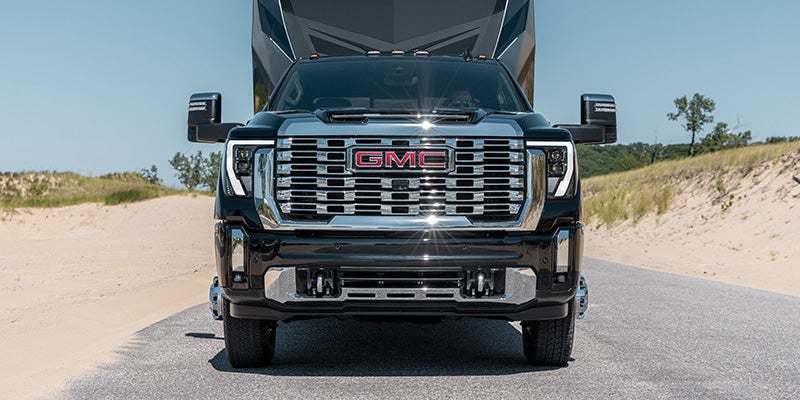
Choose the Truck Around the Load, Not the Badge
The Sierra 3500 HD sits at the upper end of GMC pickup truck towing and hauling strength, but the 3500 HD badge does not make every configuration interchangeable. Two trucks from the same model line can carry different ratings because their cab, bed, drivetrain, rear wheel setup, engine, hitch arrangement, and installed equipment are different.
A stronger buying process starts with the load. Know the trailer's expected loaded weight instead of relying only on its empty weight. Identify whether the trailer uses a conventional receiver, fifth wheel connection, or gooseneck connection. Estimate the passengers and gear that will remain in the cab. Add tools, auxiliary equipment, cargo, and anything else that stays in the bed.
Those details create the basis for comparing trucks. A Crew Cab may serve a work team or family better than a smaller cab, yet the added cab structure and seating needs become part of the truck's total configuration. Four wheel drive may suit a shopper who travels across loose jobsite surfaces or unpaved access roads, while another shopper may place greater emphasis on a different axle and drivetrain combination for a highly specific tow setup.
The goal is to buy the truck that matches the load you expect to move, with room for the way the truck will be equipped and occupied.
Why the 36,000 Pound Figure Requires Configuration Context
The 2026 GMC Sierra 3500 HD offers a maximum available towing figure of up to 36,000 pounds when properly equipped. That number is an upper limit for a qualifying setup, not a universal rating attached to every Sierra 3500 HD on a dealer lot.
This distinction matters before comparing inventory. Maximum trailering figures are reached through a specific combination of truck equipment and trailer connection. A shopper pulling from a conventional receiver should not use a gooseneck maximum as the working number for that trailer. A Crew Cab four wheel drive truck should not inherit a rating from a differently configured Regular Cab truck simply because both carry the Sierra 3500 HD name.
Start by identifying three numbers:
- Expected loaded trailer weight
- Expected tongue or pin weight
- Cargo and passenger weight carried by the truck
Then match those numbers against the exact configuration under consideration. The truck's labels, trailering information, equipment, and applicable GMC rating data deserve more weight than a broad model maximum.
This method also gives a shopper a clearer way to compare a Sierra 3500 HD with a Sierra 2500 HD. The question is not whether the larger number sounds preferable. The question is whether the intended trailer and loaded truck demand the higher towing or payload range available from the 3500 HD platform. A shopper whose numbers sit comfortably within a lower configuration may reach a different conclusion than someone moving a large fifth wheel, heavy gooseneck trailer, or substantial bed load.
Duramax Diesel or 6.6L Gas V8
The 2026 Sierra 3500 HD engine decision starts with how much weight the truck will move and how frequently it will do that work. GMC offers a 6.6L gas V8 and an available 6.6L Duramax Turbo Diesel V8, giving shoppers two distinct ways to configure the truck.
The gas V8 deserves serious consideration when the truck's expected load fits the chosen configuration and the shopper does not need the diesel setup tied to the highest tow rating. Purchase price is part of that discussion. So are expected annual miles, towing frequency, time spent with the truck unloaded, and the type of trailer being used.
The Duramax path becomes compelling when a shopper is evaluating very heavy trailer demands or wants the powertrain associated with the upper end of Sierra 3500 HD towing. Diesel torque delivery also changes how the engine approaches substantial load at lower engine speed. That is relevant for a truck expected to spend a large share of its miles pulling heavy equipment, a large fifth wheel, or another substantial trailer.
Do not choose by engine reputation alone. Ask how frequently the truck will tow, what the loaded trailer weighs, whether the trailer weight may increase later, and which exact configuration carries the required rating. A diesel badge cannot correct a truck that is mismatched to the trailer, and a gas truck should not be dismissed when its exact numbers fit the job.
Single Rear Wheel or Dually
A GMC 3500 dually search usually signals that the shopper is moving beyond engine choice and into rear axle configuration. Dual rear wheel models add a second tire on each side of the rear axle, creating a wider rear footprint. That layout belongs in the discussion when substantial trailer pin weight, heavy bed loads, or upper range tow requirements are central to the purchase.
The tradeoff is physical size. A DRW truck is wider at the rear than a single rear wheel truck. That changes parking, narrow access points, drive through lanes, tight jobsite paths, and other spaces where rear width must be judged carefully. A shopper who spends nearly every working mile supporting a large trailer may evaluate that compromise differently from someone whose truck will spend substantial time commuting without a trailer.
A single rear wheel Sierra 3500 HD can make sense when the selected truck's ratings fit the load and the owner wants a narrower rear body. DRW becomes the stronger path when the load calls for the configuration or when the shopper is pursuing a qualifying setup near the upper end of the model's tow range.
Before choosing, compare:
- Loaded trailer weight
- Estimated pin or tongue weight
- Bed cargo
- Passenger weight
- Rear axle configuration
- Parking and access space
The dually question should be answered with the load sheet and the truck's intended routes in front of you, not by appearance alone.
Match the Hitch to the Rating
Conventional, fifth wheel, and gooseneck towing figures belong to different trailer setups. The connection point is part of the reason.
A conventional trailer connects near the rear of the truck through a receiver hitch. Fifth wheel and gooseneck setups place the connection in the bed area, changing where trailer load enters the truck. The two bed mounted hitch styles also serve different trailer designs and ownership needs.
A single maximum tow number should never replace hitch specific research. A shopper with a conventional equipment trailer needs the rating for that setup. A large fifth wheel owner needs fifth wheel data. A gooseneck equipment or livestock trailer calls for its own matching figures.
Bring the trailer type into the conversation before selecting inventory. Ask how much the exact Sierra 3500 HD configuration can tow with the hitch architecture your trailer uses.
Payload Belongs in the Same Conversation as Towing
Towing gets the headline number, but payload can narrow a truck choice before the trailer reaches the maximum tow figure. GMC lists up to 7,290 pounds of maximum available payload for the Sierra 3500 HD, yet the exact truck carries its own figure based on configuration.
Payload is not limited to material stacked in the bed. People, cargo, tools, hitch equipment, and trailer tongue or pin weight all enter the loaded truck discussion. A fifth wheel may place substantial pin weight into the truck. A work crew adds passenger weight. Toolboxes, transfer equipment, auxiliary items, and job materials add more.
Consider a truck that will carry several adults, a bed mounted hitch, tools, and trailer pin weight. Looking only at total trailer weight leaves part of the load picture unanswered. The shopper needs to know what the truck itself will carry while pulling that trailer.
A useful evaluation should include:
- People expected in the cab
- Regular tools and work gear
- Bed cargo
- Installed hitch hardware
- Estimated trailer tongue or pin weight
- Added accessories or equipment
Compare that total against the exact truck instead of a maximum figure for the model line. This step is central when choosing between Sierra 2500 HD and 3500 HD, between SRW and DRW, or among different cab and drivetrain setups.
Evaluate Trailering Technology by the Maneuver
Trailering technology is easiest to judge by asking what you need to do with the trailer. A feature list may sound impressive without telling you whether it supports the hardest part of your own towing routine.
Think through the maneuvers that consume the most attention. Hitching alone is one task. Backing a long trailer into a narrow space is another. Side visibility around a wide trailer presents a different challenge. Monitoring the trailer during a longer trip creates another set of priorities.
During an in person vehicle review, ask to see the trailering and camera tools available on that exact truck. Then connect each tool to a task you perform. Check how clearly you can judge the hitch area. Review the available camera perspectives. Look at how trailer information is organized. Sit in the driver's seat and move through the controls instead of evaluating the technology from a brochure.
The strongest technology choice is the one you can use quickly while managing the truck and trailer you own.
Narrow Cab, Bed, Trim, and Exact Truck
Once the load, engine, rear wheel configuration, and hitch type are clear, cab and bed selection becomes easier. Crew Cab space may rank high for shoppers carrying a team or family. A different cab arrangement may fit a work focused setup with fewer passengers. Bed choice also matters when tools, hitch hardware, cargo dimensions, or trailer connection equipment occupy the box.
Trim selection should come after those core truck decisions. Interior materials, display features, exterior treatments, off road equipment, and added technology can shape the final choice, but they should sit on top of a configuration that already fits the load.
For shoppers near Gonzales, the exact inventory review should verify:
- Gas or Duramax diesel engine
- Single or dual rear wheels
- Two wheel drive or four wheel drive
- Cab configuration
- Bed configuration
- Hitch related equipment
- Exact truck ratings and labels
That sequence keeps the purchase centered on the work first, then lets trim and cabin preferences refine the truck you will spend time in.
Find the Sierra 3500 HD Setup That Fits the Job
A 2026 GMC Sierra 3500 HD should be selected with the trailer and loaded truck in mind from the first comparison. Start with weight, hitch type, passengers, cargo, and equipment. Then narrow the engine, rear wheel setup, drivetrain, cab, bed, and trim.
Ross Downing GMC of Gonzales gives local shoppers a place to compare Sierra 3500 HD configurations near Gonzales, Louisiana, and review the exact truck behind each listing. Bring your trailer information and the way you expect to use the truck. A closer configuration review can connect those demands to the Sierra 3500 HD that fits the work ahead.
Does every 2026 GMC Sierra 3500 HD tow 36,000 pounds?
No. The 36,000 pound figure is the maximum available rating for a qualifying properly equipped configuration. Cab, drivetrain, rear wheel setup, powertrain, hitch type, and other equipment can change the rating that applies to a specific truck. Verify the exact vehicle and the trailer connection you plan to use.
When does a Sierra 3500 HD dually make more sense than a single rear wheel truck?
A DRW setup deserves closer consideration when substantial trailer pin weight, heavy bed load, or a target tow configuration calls for it. The added rear width should also be weighed against parking space, access routes, and how much time the truck will spend without a trailer.
What information should I bring when comparing Sierra 3500 HD trucks for towing?
Bring the trailer's expected loaded weight, hitch type, estimated tongue or pin weight, passenger count, regular bed cargo, and any equipment that will stay on the truck. Those details make it easier to compare the exact configuration against the job.
Should I choose four wheel drive for a 2026 Sierra 3500 HD tow vehicle?
Four wheel drive may suit routes that include loose surfaces, unpaved access, or places where additional driven wheels fit the task. It should still be evaluated as part of the full truck configuration because drivetrain choice changes the vehicle setup. Compare the exact rating, expected routes, and loaded trailer before choosing.
(Note: Pricing details are not included here. For financing and vehicle purchase information, please contact our dealership.)